
Noticias
Glass Mosaic Adhesive and Backing Compatibility
A glass mosaic sample can look right on a display board and still leave an installer with two unanswered questions: what will the mortar look like through it, and what will the mortar actually bond to? Distributors need both answers before recommending an adhesive. Glass mosaic tile adhesive selection is therefore a compatibility decision involving the tile face, its backing and the intended installation, rather than a choice based only on the word glass on a bag.
The adhesive becomes part of the appearance
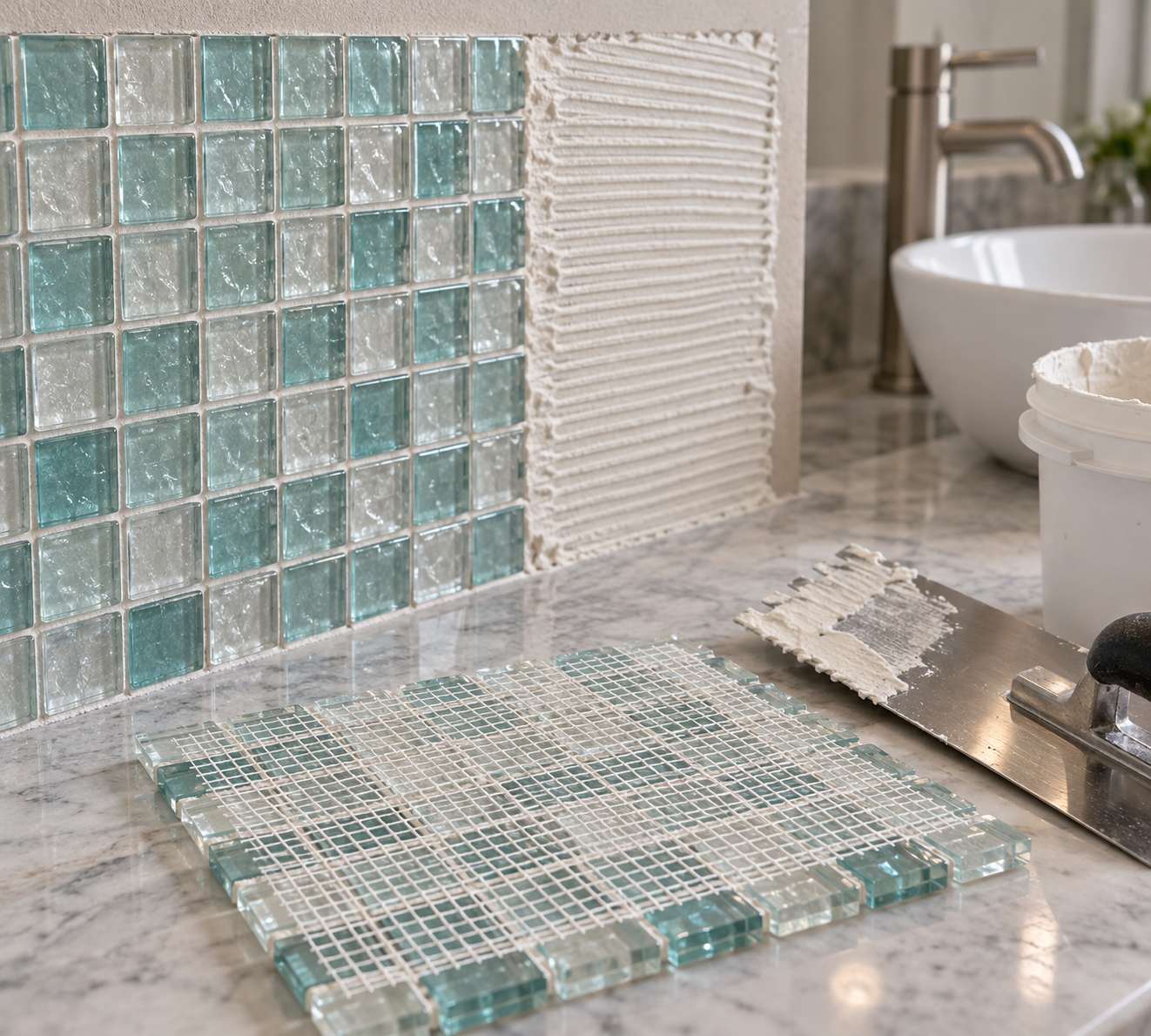
Translucent glass needs an appearance check with the intended installation materials. The adhesive colour and the way the bed is formed can influence the finished look. An attractive loose sheet is not enough to establish how it will appear once fixed and grouted.
A small installed panel gives the trade buyer something more useful to review. Use the proposed tile, adhesive and grout together, then assess the result after the specified curing period. Include the lighting that matters for the application where practical, rather than judging the panel only in a warehouse.
Mortar colour needs a real sample
White mortar is commonly associated with translucent glass, but the correct recommendation must come from the tile and adhesive manufacturers for the selected assembly. Do not assume that every mortar sold for glass is white, or that a white mortar will suit every coated or backed glass tile.
The distributor’s role is to keep that distinction clear. A request for mortar for glass tile should lead to a discussion about the actual glass and its backing. It should not end with a colour recommendation detached from the product being installed.
A uniform appearance needs suitable installation
Visible ridges or irregular dark areas call for a review of the installation method as well as the material choice. Ask the installer to follow the specified trowelling and bedding procedure and examine the trial panel. Do not promise that a colour change alone will resolve every appearance issue.
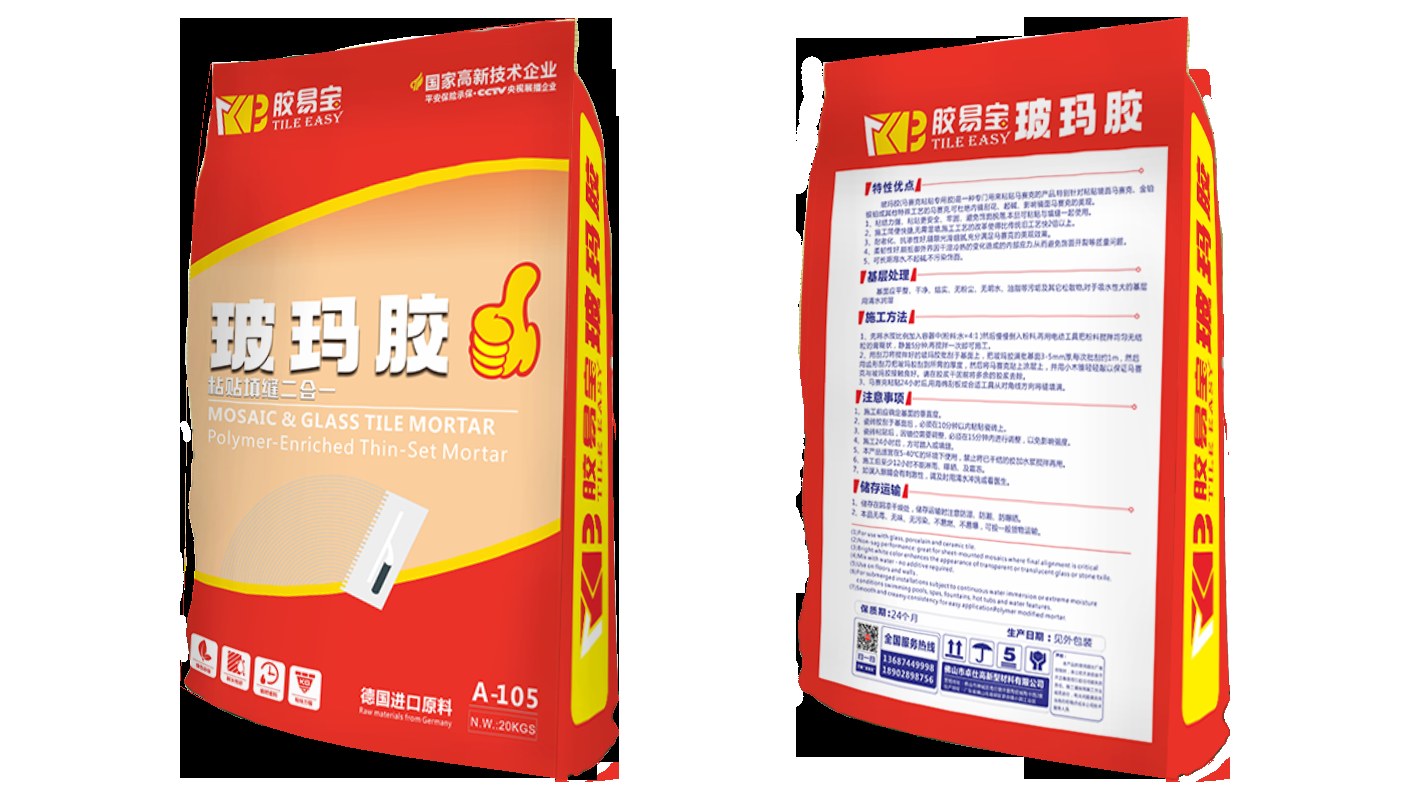
For a product-specific discussion, Guanyu Ceramics supplies TILE EASY Mosaic & Glass Tile Mortar, model A-105. This mosaic and glass tile mortar is supplied in 20 kg packs and supports bonding and grouting. Its suitability for a particular glass backing and required visual finish still needs confirmation.
The back of the sheet determines the next question
Backing deserves its own inspection because the bonding surface may include more than glass. Mesh, fixing dots, coatings and other mounting materials create different conditions. Photograph the reverse of the actual sheet and identify the mounting system before seeking a recommendation.
The important distinction is between bonding directly to glass and bonding through, or against, another material. A mortar recommendation for one configuration should not be transferred casually to another. A shared pattern or colour does not establish that two sheets have the same construction.
| Mosaic construction | Main compatibility question | Useful review material |
|---|---|---|
| Translucent glass | Will the installed bed affect appearance? | Cured sample panel |
| Rear mesh mounting | Is the mounting adhesive compatible? | Rear photograph and tile information |
| Coated glass backing | Is bonding to the coating approved? | Coating identification |
| Mixed-material sheet | Does one system suit every component? | Complete sheet specification |
The table identifies questions rather than approving any construction. A product labelled for glass cannot, by that label alone, establish compatibility with an unidentified coating or mounting adhesive. Obtain confirmation for the complete sheet, not just its most visible material.
For buyers sourcing mosaic tile adhesive in China, the adhesive recommendation should be reviewed alongside the tile information. Keep it attached to that specific tile selection so that warehouse substitutions do not quietly invalidate the earlier discussion.
Wet exposure changes the compatibility review
A dry decorative wall and a continuously immersed installation are different exposure conditions. Ask for explicit approval of the proposed assembly for its intended use. Water resistance on an adhesive label should not be read as blanket permission for swimming pools or as proof of a waterproof wall system.
That distinction matters for mesh-mounted mosaics in particular. The mounting material also needs to be suitable for the exposure. An adhesive recommendation cannot settle a weakness in an unidentified backing, so involve the tile supplier when the construction is unclear.
Shower use also requires a suitable substrate and waterproofing design. Keep the adhesive compatibility decision connected to that assembly, without asking the adhesive to perform every function. Grout, waterproofing and movement detailing need their own appropriate specifications.
A trial panel answers the practical questions
A useful trial panel reproduces the combination that will be sold or specified. It is not a display exercise using whichever mortar happens to be open. Record the product identities so that the approved result can be connected to the eventual supply.
Before approving a recommendation, review:
The tile face, reverse and mounting method.
The proposed adhesive and grout identities.
The substrate and intended wet exposure.
The cured appearance and any unresolved compatibility questions.
Application conditions also belong in that review. A-105 calls for a level, dry, solid surface free from dust, oil and grease. Its stated application temperature is 5-40 degrees Celsius. Those conditions help define a meaningful product trial; they do not prove suitability for a backing that has not been assessed.
The working area needs to be understood correctly. A-105 guidance uses approximately one square metre at a time and an application thickness of 1-5 mm. The one-square-metre instruction is a working-area limit, not the coverage of a 20 kg bag. Ask for a coverage estimate tied to the actual installation.
A clear recommendation at the trade counter
Distributors can make adhesive advice more useful by keeping the tile and installation context together. When comparing glass tile adhesive suppliers in China, establish the mosaic construction first, then request the matching adhesive recommendation. Avoid treating the tile sample and mortar bag as independent purchases.
Any unresolved detail should remain visible in the recommendation. For example, do not turn an unconfirmed mortar colour into a sales claim, or extend a dry-wall recommendation to immersion. A short, accurate limitation is more useful than an assurance that cannot be tied to the actual materials.
Summary for glass mosaic adhesive selection
Glass mosaic adhesive selection has two connected tests: the cured appearance and compatibility with the real bonding surface. Identify the backing, confirm the exposure and review a representative panel. A product name helps begin the discussion; the complete tile-and-adhesive combination is what needs approval.
For a product discussion with Guanyu Ceramics, Contáctanos with photographs of both sides of the mosaic and details of the intended installation.
Preguntas frecuentes
Is white mortar always required for glass mosaics?
Do not make that a universal rule. Confirm the mortar colour and adhesive system recommended for the selected glass, then review a cured panel. Appearance and bonding compatibility both matter, including any coating on the tile reverse.
Can ordinary tile adhesive be used for glass?
Only use an adhesive approved for the particular glass tile and installation conditions. A general ceramic-tile description is not enough to establish that approval. Ask about the actual backing rather than relying on the appearance of the face.
Does mesh backing affect the adhesive choice?
Yes. The mounting material becomes part of the compatibility question. Identify the mesh and its fixing adhesive, and confirm suitability for the intended exposure. Avoid assuming that approval for unbacked glass automatically includes a mesh-mounted sheet.
Does water resistance mean an adhesive is pool suitable?
No. Continuous immersion needs explicit confirmation for the complete assembly, including the tile mounting materials. A general water-resistance claim does not provide that approval or replace the pool’s waterproofing design.
Can A-105 be used for bonding and grouting?
A-105 supports both functions. Confirm its use with the selected mosaic, joint requirements and exposure before specifying that approach. Dual use does not eliminate the need to check appearance, backing compatibility or the surrounding installation system.

nuestro mejor producto
Producto que ofrecemos

ponerse en contacto
¡Cómo podemos ayudarte!

nuestros testimonios
Lo que dicen sobre nuestro