
News
Wood-Look Mosaic Tile: How to Choose the Right Pattern for Your Space

Wood–Look Mosaic Tile and Its Appeal
Wood-look mosaic tile brings the cozy feel of real wood. Yet it gives the strong build and simple upkeep of porcelain or ceramic. These tiles work well in spots where actual wood would not hold up. Think bathrooms, kitchens, or sunny patios outside. People like them because they mix good looks with real use. They fight off water, clean up fast, and come in many designs and shades.
Comparing Wood Effect Ceramic Floor Tiles and Wood–Look Mosaic Tile
Both wood-effect ceramic floor tiles and wood-look mosaic tile try to look like wood. But they vary in how big they are, how you put them in, and where they fit best.
Wood-effect ceramic floor tiles tend to be bigger. They suit wide spots like living rooms or sleeping areas. These tiles copy the lines and feel of true wood floors. So they make smooth ground covers. On the other hand, wood-look mosaic tile uses tiny pieces or sheets. It shines in adding a rough feel or special touches to walls or tight areas.
Guanyu Ceramics makes mainly ceramic tiles. That includes shiny ones, rough ones, wall types, and glass mosaics. Their porcelain mosaics have a water pull of ≤0.5%. This makes them tough and right for wet places.

Key Factors to Consider When Choosing a Pattern
When you pick a tile design for wood-effect ceramic tiles or mosaics, think about these main points:
Room Size
Tiny rooms do better with basic designs. This stops too much busy sight.
Lighting
Places with lots of sun can handle trickier designs.
Style Goals
Pick if you aim for old-time charm, fresh plainness, or fancy grace.
Traffic Level
Spots with heavy steps benefit from designs that hide dirt or scratches.
You should also look at the tile stuff’s water pull. Porcelain tiles pack tightly. They last long (water absorption ≤0.5%). And they fit spots with lots of steps.

Popular Installation Patterns for Wood-Effect Ceramic Tiles
Here are some top ways to lay wood-effect ceramic floor tiles:
Straight Lay
This is the easiest setup. Tiles line up in rows like a net. It shows off the tile’s feel best.
Staggered/Running Bond
It copies old wood floors by shifting each line a bit. This way works in many spots. Plus, it covers small flaws.
Herringbone
It makes a side-to-side wavy look that brings flow. It suits special walls or door spots.
Chevron
This is like herringbone. But it uses cut angles to form a steady V shape. The look is fancier and smoother.
Basket Weave
It takes long tiles to make a crossed pattern. This fits small zones well.
These setups change not just the look. They also shift how big or small a room seems.
Matching Patterns with Room Size and Shape
Your room’s form and how big it is matter a lot in picking the best design:
Small Rooms
Go for straight lines like even rows or shifted ones. They help the area feel wider.
Long Narrow Rooms
Try side-by-side setups such as herringbone across the short side. This brings even feel.
Open Spaces
Designs like chevron or basket weave can stand out. They won’t take over the whole spot.
Coordinating Wood–Look Mosaic Tile with Existing Decor
To make sure it fits your current setup, use these tips:
Color Harmony
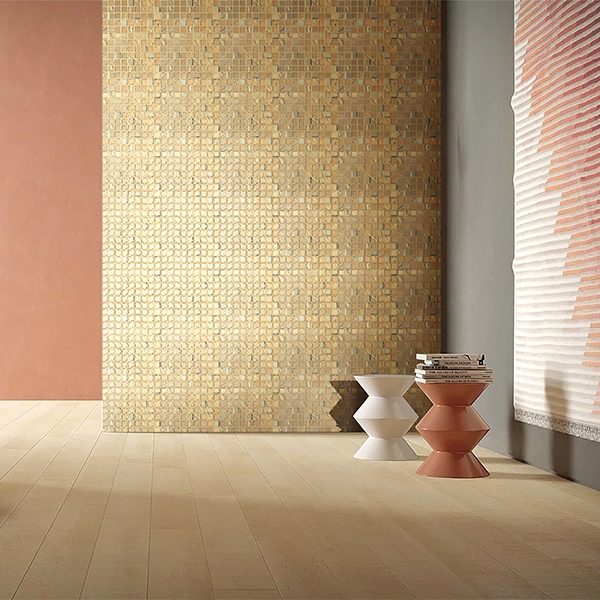
Pick mosaic shades that match your chair colors or wall tones. Options cover light green, dark blue, gold, pink, red, and dark green. They suit many tastes.
Texture Balance
If you have flat faces like glass or metal, pair them with rough mosaic ends.
Design Continuity
Set mosaic tiles as edge strips or back walls. Let them go with your ground tiles.
This easy change lets wood–look mosaic tiles fit into old or new home styles without a hitch.
Tips for Mixing and Matching Wood-Effect Ceramic Tiles
You can blend different wood-effect ceramic tiles to add layers. Just do it with care:
Stick to a Color Palette
Go for shades in the same group. For example, soft browns.
Mix Textures, Not Styles
Pair dull with shiny ends. But skip rough with super new looks.
Use Transition Strips
Put them between varied designs or shades. This marks off parts in big open spots.
Limit Pattern Complexity
If the floor has wavy herringbone, choose plain wall mosaics.
Guanyu Ceramics gives OEM/ODM help. That means custom sizes (like big sheets), designs, and shade matches. So it’s simple to blend tile kinds in one job.
Common Mistakes to Avoid When Selecting a Pattern
Skip these usual errors. That way, your tile job looks sharp:
Ignoring Grout Lines
Always plan for the gaps in your design.
Overcomplicating Small Spaces
Fancy designs can crowd tight rooms.
Skipping Layout Test
Do a dry setup first. This lets you see the end look.
Clashing Styles
Don’t blend old wood-look tiles with super new tools unless you mean to.
Not Using Proper Adhesive
TILE EASY Mosaic & Glass Tile Mortar sticks hard. It goes on smoothly, fights water, and stops stains. So it’s great for setting ceramic and glass mosaics.
Picking the top setup design for your wood-effect ceramic tiles or wood-look mosaic tile means mixing looks with real work. Choices go from plain line ways to fancy ones like herringbone or basket weave. Each one shapes how the space feels and looks.
FAQ
1. What are the benefits of using wood-look mosaic tiles in bathrooms?
Wood-look mosaic tiles give a warm and natural look of wood. But they skip the wet problems of true wood. Their small size and many uses make them ideal for bath backs or side walls.
2. How do I choose between wood-effect ceramic floor tiles and wood-look mosaic tiles?
If you need big ground covers, wood-effect ceramic floor tiles work best. They set smoothly. For walls, back spots, or special zones, wood-look mosaic tiles bring more texture and a rough touch.
3. Are wood-look mosaic tiles suitable for outdoor use?
Yes, wood-look mosaic tiles from porcelain or ceramic last long. They stand up to wet. So they fit great on patios or yard spots. Pick ones made for outside to get the best hold.
4. Can wood-effect ceramic tiles be used for underfloor heating systems?
Yes, wood-effect ceramic tiles suit underfloor heat well. They pass warmth fast. And they keep a steady heat all through the room.
5. How do I clean and maintain wood-look mosaic tiles?
Wood-look mosaic tiles stay neat and easy. That’s from their ceramic or porcelain make. Sweep often. Mop now and then with a soft, clean mix. For hard spots, use a balanced pH wash.

our best Product
Product We’re Offering

get in touch
How May We Help You!

our testimonials
What They Say About Our