

Novas
Porcelain Mosaic Color Planning for Tile Distributors
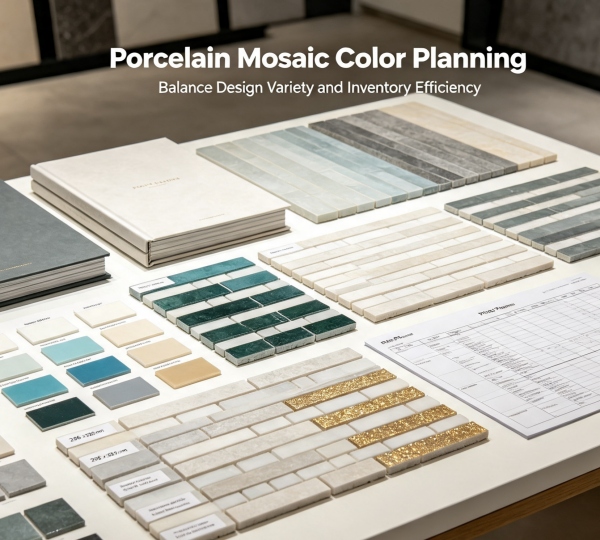
A successful mosaic collection is not built by adding as many colors as possible. For mosaic tile distributor, the challenge is finding the right balance between design variety and inventory efficiency. Similar shades can easily create unnecessary SKU pressure, while limited choices may reduce opportunities for residential and commercial projects. A well-planned color range helps distributors present clearer options, manage samples, and support customer decisions.
At Guanyu Ceramics, our porcelain mosaic collections are designed with different decorative needs in mind. For example, the striped porcelain mosaic series uses horizontal strip patterns on approximately 296 x 300 mm sheets, creating a directional visual effect for walls, floors, and feature areas.
Build the Assortment Around Project Applications
Color selection should start with how customers use mosaic products. Designers and contractors usually do not choose colors separately from the space. They consider the atmosphere they want to create, the surrounding materials, and whether the mosaic is used as a main surface or an accent element.
For example, lighter colors can support fresh and relaxed interiors, while deeper tones can create stronger visual focus on feature walls or decorative areas. Guanyu’s striped porcelain mosaic range includes options such as light green, ocean blue, blue, gold, pink, red, and dark green, allowing distributors to organize collections according to different project styles.
Instead of displaying every available color without structure, distributors can group products by application:
| Collection Role | Color Direction | Uso Tipico |
| Core collection | Light and versatile tones | Regular display and repeat projects |
| Accent collection | Stronger colors such as blue, red, or gold | Feature walls and customized projects |
| Seasonal or project collection | Special combinations | Specific design concepts |
This approach helps sales teams recommend products faster and prevents customers from being overwhelmed by too many similar options.
Separate Core Colors From Project Colors
Not every color needs to become a regular stock item. A distributor’s core range should focus on colors with broader market demand, while project colors can be introduced according to customer requirements.
Core colors usually need stronger availability because they support repeat orders and showroom displays. Project colors, however, are often selected for a specific design concept and may require additional confirmation before ordering.
For example, a dark blue or red striped porcelain mosaic can create a strong decorative effect, but these colors may not have the same repeat demand as lighter or more neutral options. Separating these two categories allows distributors to provide more choices without increasing unnecessary inventory risks.

Use Scene Boards to Explain Color Combinations
A small mosaic sheet does not always show the final visual effect. Horizontal stripe patterns can change depending on lighting, grout color, surrounding tiles, and installation scale.
A useful display board should include:
- The physical mosaic sample for accurate color review;
- An installed scene image showing the overall effect;
- A matching recommendation with surrounding tiles or materials.
Para striped porcelain mosaic, the direction of the pattern is an important selling point. Showing how the horizontal lines extend across a surface helps designers and buyers understand how the product changes the feeling of a space.
Create Clear SKU and Sample Management
Color planning only works when each product has a clear identity. A distributor should avoid using general names such as “blue mosaic” or “green stripe” as the only product reference because similar colors may create confusion during ordering.
Each SKU record should include:
- Supplier product code;
- Sheet size;
- Material type;
- Color description;
- Approved sample date;
- Application recommendation;
- Display image.
For Guanyu’s striped porcelain mosaic series, each color is linked with a specific product code, such as GYF022046 for dark blue and GYF022083 for red. Keeping the supplier code as the main reference helps sales teams, purchasing teams, and customers confirm the exact product.
Sample management is equally important. Digital images can support communication, but physical samples remain necessary because surface details, color depth, and light reflection may appear differently on screens.

Match Material Information With Application Needs
Color is the first factor customers notice, but material information supports purchasing decisions. For distributors, this information helps explain the product category and compare it with other ceramic decorative options. However, application requirements should always be reviewed separately. A project may have different needs depending on location, installation method, cleaning conditions, and expected usage.
For example, a decorative wall project and a floor application may require different discussions. Product appearance, installation conditions, and project requirements should be considered together before final selection.
Prepare a Practical RFQ for Mosaic Collection Expansion
When expanding a porcelain mosaic collection, a clear quotation request helps suppliers provide more accurate support. Instead of asking only for prices, distributors should prepare basic product information, including:
- Selected product codes and colors;
- Required quantities;
- Wall or floor application;
- Sample requirements;
- Packaging expectations;
- Destination and delivery schedule.
Clear information allows suppliers to confirm availability, recommend suitable combinations, and identify possible issues before production.
For distributors developing a new mosaic range, the goal is not simply to increase the number of products. A stronger collection combines attractive colors, clear product organization, reliable samples, and practical project applications.
Conclusão
A successful porcelain mosaic collection is built through careful color planning rather than simply increasing product choices. By separating core colors from project-specific options, organizing clear SKUs, and supporting selections with reliable samples and display solutions, tile distributors can improve inventory efficiency while offering designers more practical choices.
With its porcelain mosaic collections, product information support, and customized selection discussions, Cerâmica de Guanyu works with distributors to develop suitable product ranges based on target colors, project applications, and market needs. Buyers can provide their preferred colors, application scenarios, and quantity requirements to create a more efficient and market-focused mosaic collection.
FAQ
How many colors should a distributor keep in a mosaic collection?
The ideal number depends on the target market and customer demand. A balanced collection usually combines frequently requested core colors with selected accent colors for special projects.
Should every available mosaic color become a stock item?
Not necessarily. Regular stock is usually better focused on repeat-demand colors, while project-specific colors can be confirmed according to customer requirements.
Why are physical samples important for mosaic selection?
Physical samples show details that digital images may not fully represent, including surface texture, color variation, and the visual effect under different lighting conditions.
What information should be included when requesting a mosaic quotation?
A quotation request should include product codes, colors, quantities, application requirements, sample needs, packaging details, and delivery expectations to reduce communication delays.

nosso melhor produto
Produto que estamos oferecendo




entrar em contato
Como podemos ajudá-lo!

nossos testemunhos
O que eles dizem sobre nossa