
Novas
Sintered Stone Furniture Panels for Built-Ins

Built-in furniture turns a surface into a moving, touched, and serviced part of an interior. This guide helps designers, contractors, and import buyers decide when sintered stone belongs on cabinet fronts, island panels, reception counters, or coffee-table surfaces, and what must be verified before a quotation becomes a production order.
The Furniture Component Comes First
Door front, panel, or tabletop
A furniture brief should name the component before it names the material. A cabinet door, wardrobe front, island end panel, reception counter face, and coffee table top each carry different loads, edges, hardware, and cleaning exposure. The visible face may share one stone look, but the hidden build-up determines whether the part can be fabricated and maintained.
The term sintered stone covers a wide surface family. A large decorative wall slab, a floor tile, and a wrapped furniture panel can be visually related while using different thickness, backing, fixing, and edge decisions. A buyer should therefore ask for the exact configuration, not a broad material claim.
Why thickness needs a boundary
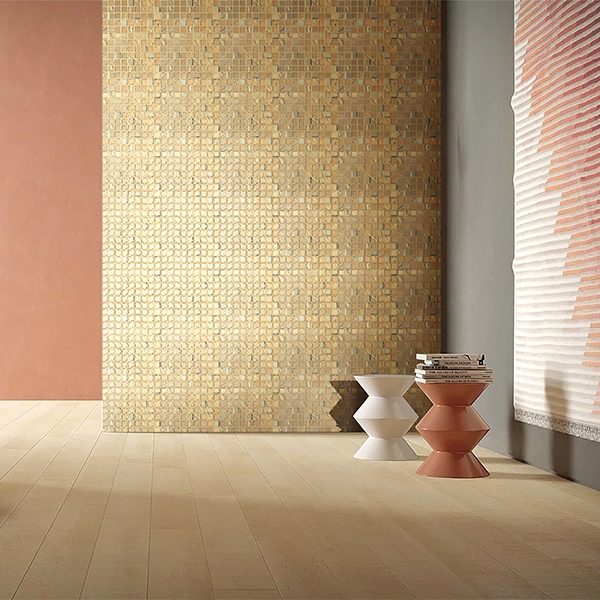
Thickness is useful only when it belongs to the selected application. Guanyu Ceramics presents a 6 mm ultra-thin, impact-resistant structure for a UV-printed feature-wall slab configuration; that figure should not be copied automatically to a cabinet door or tabletop. The same rule applies to fire, scratch, warranty, and water-absorption language.
A responsible drawing should record the face material, backing or frame, finished weight, unsupported span, hinge zone, corner method, and replacement path. This is especially important for customized fully sintered tile projects, where the design may combine digital artwork, vein direction, and tight cabinet tolerances.
Where Built-In Applications Create Value
Cabinetry and display furniture
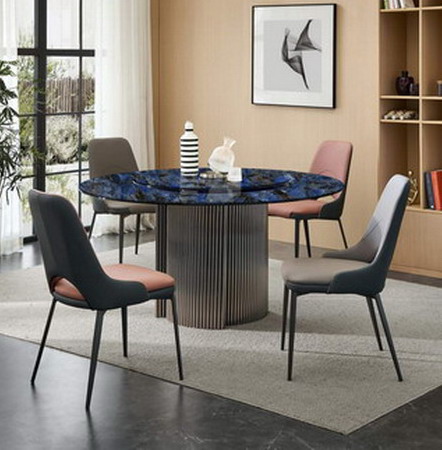
Built-ins benefit from slab surfaces when the project wants visual continuity across doors, sides, and adjacent walls. A matte front can continue across an island return or reception counter so the surface feels integrated rather than applied. This approach fits kitchens, hotel suites, retail displays, showroom cabinetry, and commercial lobbies where the furniture is part of the architecture.
Guanyu Ceramics’s supplied slab presentation describes matte-finish cabinet doors with CNC-cut edges, 45-degree mitered joints, and a seamless full-slab wrap. Those details are fabrication features, not automatic promises for every sintered tile furniture order. Approve a corner sample because the joint line, edge tone, and pattern alignment are visible at hand height.
Tables and horizontal surfaces
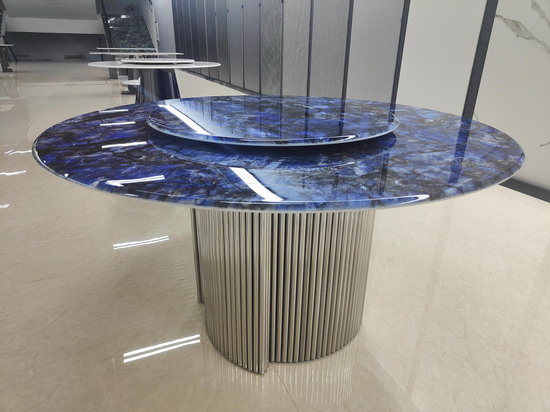
Tabletops add another decision layer because users lean, place objects, and clean the surface repeatedly. A buyer searching for a sintered stone coffee table supplier China should still ask whether the offered top is a loose tabletop, a bonded top, a wrapped base, or a complete furniture item. The answer affects packing, breakage risk, installation responsibility, and after-sales replacement.
Large surfaces also need a clear visual direction. Vein matching, panel sequence, print scale, and edge returns should be approved before production. Digital printing can support customized fully sintered tile aesthetics, but the artwork file, scale, orientation, and tolerances must be controlled by the quotation and drawing.
A Supplier Brief That Prevents Misquoting
A good RFQ should make the furniture construction visible. Include finished sizes, quantities, room location, use intensity, preferred finish, edge detail, hardware interface, sample requirement, packing expectation, and installation responsibility. If several furniture types share one project, separate the cabinet fronts from tabletops and decorative wall slabs instead of blending them into one line item.
Ask for a physical sample that shows the face, edge, joint, and cleaning response.
Request drawings for corners, openings, handles, hinges, and unsupported spans.
Keep sintered stone slabs, furniture panels, and floor tiles in separate specification rows.
Confirm whether Guanyu Ceramics or the buyer controls fabrication, installation, and replacement panels.
Record the finish code, artwork file, pattern direction, packing method, and warranty scope.
This record also protects the supplier. It lets Guanyu Ceramics review the proposed application, explain which slab or tile configuration is suitable, and avoid moving claims from one product form to another. A clear brief is the difference between a surface sample and a buildable furniture package.
How Guanyu Ceramics Fits the Project
Furniture buyers often want one visual language across walls, floors, and fixed cabinetry. Guanyu Ceramics can support that discussion through its tiles-and-slabs range, sintered stone/slab options, custom printing, and coordinated surface sourcing. The company’s experience in export channels, Canton Fair promotion, and international markets also helps buyers organize samples, packing, and repeat-order communication.
The useful starting point is specific. Send the component schedule, drawings, desired finish, edge expectation, and sample questions before asking for price. Then the proposed telha totalmente sinterizada or furniture-panel configuration can be checked against the real built-in use instead of being treated as a generic decorative slab.
Summary: Specify the Built-In, Not Just the Stone
Sintered stone furniture works best when appearance, construction, and service are specified together. Lock the component type, build-up, weight, edge, pattern, hardware interface, cleaning exposure, packing, and replacement route before approval. The next decision is whether the chosen configuration can be fabricated and maintained as the exact built-in element your project needs.
Share the drawings and component schedule with Guanyu Ceramics so the team can review the selected surface configuration against the cabinet, counter, or furniture application.
FAQ
Can sintered stone be used for cabinet doors?
Yes, but the door must be engineered as a complete component. Confirm the face thickness, backing or frame, finished weight, hinge interface, edge detail, and replacement route before approving production.
Is sintered tile furniture the same as a wall slab?
No. The visual surface may look similar, but furniture panels may need different backing, edges, hardware clearances, packing, and service planning. Keep each application in its own specification row.
What should a corner sample show?
A useful sample shows the face, return, miter or edge cap, joint color, pattern alignment, and cleaning response. It should match the proposed finish and fabrication method, not only the catalog appearance.
Can patterns be customized for furniture panels?
Customization can be discussed when the project controls artwork scale, direction, color approval, panel sequence, and cut maps. The buyer should approve both a surface sample and a fabrication drawing.
What belongs in a furniture-panel RFQ?
Include sizes, quantities, room location, component type, finish, edge detail, backing or frame, hardware interface, sample requirement, packing method, installation responsibility, spare-panel plan, and warranty scope.

nosso melhor produto
Produto que estamos oferecendo

entrar em contato
Como podemos ajudá-lo!

nossos testemunhos
O que eles dizem sobre nossa