
Новости
How to Choose Adhesive for Mosaic Tile Sheets
A tile schedule can specify the mosaic down to the shade and still leave “tile glue” for the installer to interpret. Turn the sample over and that omission becomes more obvious. There may be mesh, mounting glue, a coating, or exposed tile backs. A contractor needs to know which of these the mortar will meet. Then comes the wall itself, and whether the location is dry, splashed or regularly wet.
What the Adhesive Has to Bond
Two square sheets can present quite different surfaces to a mortar. One may have exposed ceramic backs; another carries mesh and mounting glue. A mixed mosaic can add stone, metal or a coated piece to the same sheet. Turn the sample over and identify what the mortar will touch. The face photograph cannot answer that question.
Finding the best adhesive for mosaic tile backsplash work means finding an approved combination. Put the proposed mortar beside a description of the face, backing, wall and exposure. Ceramic listed on a bag? That answers the ceramic question. For glass, there is still an answer to get before the product goes into the specification.
The room description needs some precision too. “Kitchen” tells an adhesive supplier less than “interior wall behind a sink.” The area beside a cooktop may add heat limits to the review. State the actual location when comparing adhesive for mosaic tile sheets; it saves a round of vague recommendations.
The Material Narrows the Choice
|
Mosaic face |
Issue to resolve |
What to look for |
|---|---|---|
|
Ceramic or porcelain |
Bond to the tile back and the sheet construction |
Approval for the material, backing and substrate |
|
Clear or translucent glass |
Setting-bed colour and visible ridges or voids |
Glass compatibility and the specified adhesive colour |
|
Natural stone |
Possible moisture-related colour or dimensional change |
Guidance for the particular stone and finish |
|
Metal, coated or mixed pieces |
Different bonding surfaces within one sheet |
Confirmation for the complete mosaic construction |
Clear Glass Makes the Bed Visible
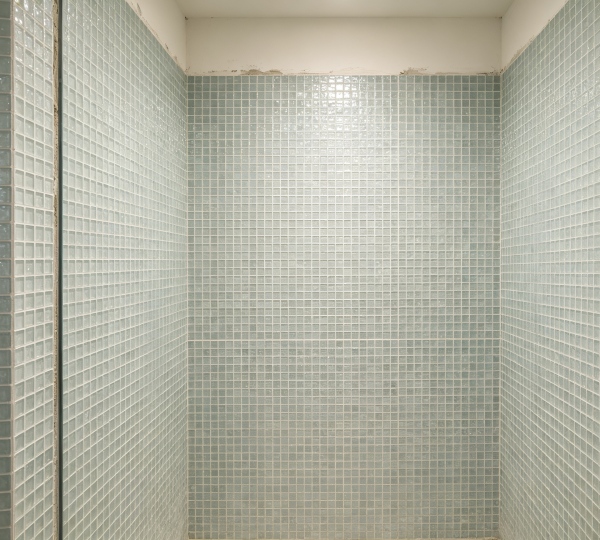
Translucent glass can reveal more of the setting bed than the installer expects. A ridge or dark patch may be visible from the finished face, even when the tile itself is the intended colour. White mortar often appears in glass specifications for that reason. It still has to be the right white mortar for the glass and backing.
A cured panel gives the colour comparison a fair basis. Test adhesive for glass mosaic tile sheets behind the glass selected for the wall, using the coverage method required for that combination. Judge it after curing. The loose glass sample that everyone approved never had a setting bed behind it.
Stone and Mixed Sheets Need a Separate Answer
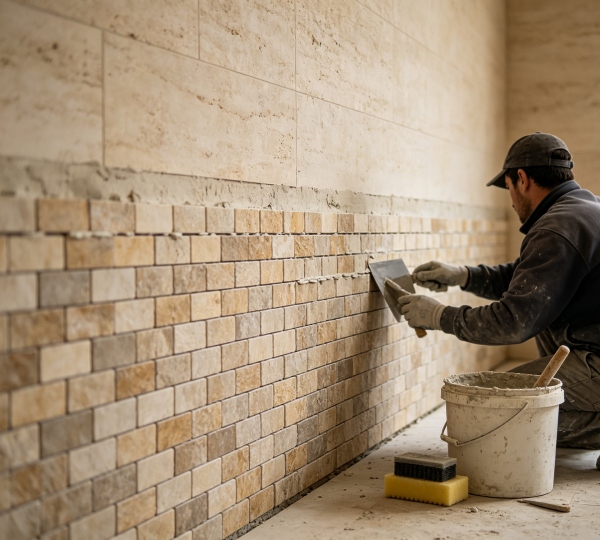
Stone introduces a different concern: moisture during curing may affect certain varieties. Find out which stone is actually in the sheet before accepting a setting material. An approval for porcelain says nothing about that sensitivity. For a mixed sheet, the most demanding component can govern the choice.
Mesh and Face Mounting Change the Interface
Mounting glue occupies space the mortar needs. Look through the mesh at the tile backs: how much is accessible? Take that sample, the proposed adhesive and the intended location to the sheet maker for confirmation. In wet work, include the backing glue in the question. Bonding the mesh to a wall is not enough if the pieces release from it.
Face paper changes the sequence of work. The backs are open to mortar, then the paper or film has to come off before the chance to adjust the pattern is lost. Try the maker’s sequence on the panel. You can see whether paper removal shifts the pieces while there are still only a few to correct.
Wet-area approval must cover the actual sheet. Occasional sink splashes, repeated shower wetting and pool immersion are different service conditions. Do not carry a dry-wall recommendation into a pool specification. This applies to the mounting adhesive as well as the mortar spread on the wall.
The Wall Can Rule Out an Otherwise Suitable Mortar
Loose paint and grease need attention before the adhesive does. Inspect the wall for both, along with any weak surface layer. A damp patch or movement needs investigating and resolving before setting. The wall must be ready for tile; spreading a thicker layer over a defect leaves that defect underneath.
A membrane is part of the bonding surface, if the wall has one. Name it in the adhesive enquiry. Keep the movement joints specified at changes of plane and elsewhere in the assembly. Where water exposure calls for waterproofing, have that wall detail agreed separately instead of expecting the mosaic to provide it.
Before placing the order, settle the points the installer will need on site:
Does it cover this mosaic material and mounting method?
Is the actual substrate included, with any membrane accounted for?
Are the location, moisture and temperature conditions permitted?
Can the specified coverage be achieved without filling the grout spaces?
Is there enough working time for alignment, with a clear curing schedule?
The Product Limits Belong With the Selection
A named product makes the working limits concrete. Guanyu Ceramics supplies TILE EASY Mosaic & Glass Tile Mortar, A-105, for tile, mosaic and glass, combining bonding with grouting. For this model, the application layer is 1–5 mm and the ambient temperature must be 5–40°C. The base needs to be dry, clean and solid.
A-105 still needs to be checked against the chosen backing. Those figures are not approval for every glass sheet. Changing the mortar also means changing the instructions kept on site. Make sure the installer has the directions for the bag actually being mixed, including any curing requirements.
A short trial run is worth viewing from two distances. Close up, inspect transfer by lifting a fresh sheet as directed and check the grout gaps. Then move to the doorway. Does a square grid appear at the sheet edges? That view can reveal an alignment issue hidden by close inspection.
One Approved Combination for the Backsplash
The selection is ready when the mortar and the assembly are both named. Keep the mosaic tile adhesive compatibility details with the sheet reference rather than in a separate correspondence trail. Include the wall and exposure. Missing an answer? Get it from the manufacturers before the materials are handed to the installer.
Repacking can leave important information behind. Distributors should keep the backing description and agreed adhesive instructions with the sheets on their way to the contractor. The installer can see the colour and size already. What they cannot see is which combination was agreed.
For a Guanyu Ceramics mosaic under consideration, связаться с нами with the sheet reference and a photograph of its back, and tell us what wall it will be fixed to.
Часто задаваемые вопросы
Which Adhesive Works for Mosaic Tile Sheets?
The answer needs the sheet material, backing, wall and exposure. With a mixed mosaic, check the least familiar piece as well as the main material. An adhesive approved for most of the sheet may still be wrong for the rest.
Is White Mortar Enough for Glass Mosaic?
Not by itself. A white bed might give the desired appearance without being approved for that glass or backing. Get that compatibility answer first, then judge appearance on a cured panel.
Can a Backsplash Adhesive Be Used in a Shower?
Only if the product and complete sheet construction are approved for that wet-area assembly. A successful dry-wall installation is not evidence of shower suitability.
Can Mosaic Mortar Also Be Used as Grout?
Only when the particular product permits both functions. A-105 combines bonding and grouting, but that feature must not be assumed for other mortars. Follow the selected product’s directions for each operation.
How Soon Can the Mosaic Be Grouted?
The adhesive directions determine the cure. Check them for the actual temperature and substrate. A waiting period remembered from another job does not settle it; protect the wall until the required cure is complete.

наш лучший продукт
Продукт, который мы предлагаем

свяжитесь
Как мы можем Вам помочь!

наши отзывы
Что говорят о нас