Новости
How to Source Non-Slip Porcelain Tiles from China
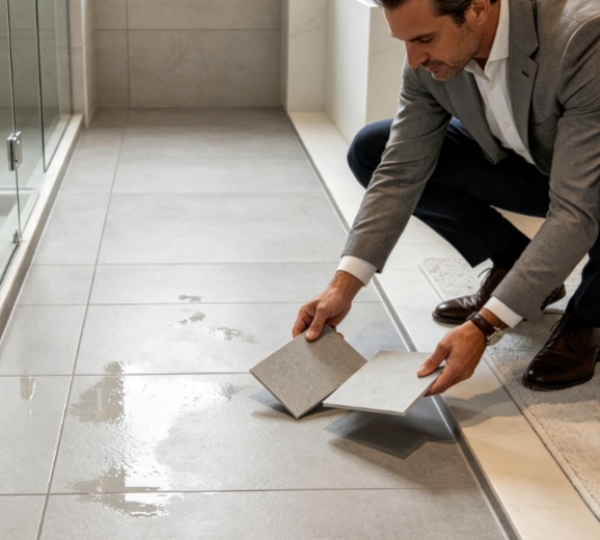
Damp floors make tile selection a vital safety, maintenance, and reputation issue for every importer. When buyers source non-slip porcelain tiles from China, the main challenge is checking actual performance before mass production begins.
Why B2B Buyers Need More Than a Rough Surface
A dependable anti-slip tile purchase begins with the room conditions, rather than just the product name. Bathrooms, showers, kitchens, pool changing areas, and senior living suites expose floors to various combinations of water, soap, grease, bare feet, shoes, and harsh cleaning agents.
Non-slip bathroom tiles must balance good traction with easy cleanability. An overly sharp texture can trap dirt. This makes the surface much harder to maintain over time. Procurement teams must ask how the surface reacts when wet. They should also check how grout lines impact overall grip. Furthermore, buyers need to confirm if the finish stays practical after daily washing.
Commercial flooring choices must separate barefoot wet areas from regular shoe traffic zones. Anti-slip shower tiles generally require comfortable barefoot contact and excellent drainage. Meanwhile, kitchen or hallway surfaces have to withstand heavy abrasion, grease, and frequent cleaning cycles.
Slip-resistant floor tiles also require steady batch quality throughout the entire order. A hotel, apartment complex, or wellness facility needs consistent color, texture, size accuracy, and packaging reliability across hundreds of cartons.
How to Verify Slip Resistance Before Bulk Orders
Testing terminology must be clear before anyone signs the purchase order. Buyers frequently encounter terms like DCOF, R rating, matte finish, textured surface, and anti-slip glaze. However, each term addresses a completely different technical standard.
DCOF is widely used in North American tile specifications. On the other hand, DIN 51130 R ratings are typically cited for ramp-based slip classifications. A factory must specify the exact test method, testing conditions, surface finish, and intended use. They should not simply write “anti-slip” on a formal quotation.
Sample evaluation should involve a wet handling test and a cleaning trial. An installation mockup is also smart when project risks are high. These steps help buyers spot obvious texture, drainage, and maintenance flaws early on.
Ask for documents that match the exact product
A helpful document package links the tested surface to the exact model, finish, size, and production batch family. Non-slip porcelain tiles must never borrow safety claims from a different collection. This rule applies even if the color or body material appears identical.
- Request the precise model name, finish type, size, and intended wet or dry usage.
- Confirm if the provided slip test actually matches the specific surface being quoted.
- Review carton labels, sample markings, and factory photos to ensure strict consistency.
- Ask how replacement or repeat orders will be managed if the project requires future stock.

Choose the Right Format for Wet Areas
Tile format impacts safety just as much as surface texture does. Smaller pieces create numerous grout joints. These extra joints can improve underfoot grip. They also make it much simpler to follow floor slopes inside showers and wet rooms.
Porcelain mosaic tiles are highly practical where drainage slopes, curved edges, or complex layouts are necessary. Guanyu’s porcelain mosaic tile data highlights porcelain material with water absorption at or below 0.5%. This is a highly valuable trait for wet area specification planning.
Large matte porcelain tiles can perform well in commercial restrooms if the floor is perfectly flat. The cleaning strategy must also be strictly defined. Buyers must still verify that water, soap, or grease will not create dangerous walking conditions.
| Project zone | Useful tile direction | Buyer check |
| Пол душевой кабины | Anti slip shower tiles or small mosaics | Wet feel, slope fit, grout plan |
| Hotel bathroom | Non slip bathroom tiles with controlled texture | Cleanability, batch consistency, barefoot comfort |
| Commercial kitchen | Textured porcelain with stain control | Oil removal, cleaning tools, abrasion risk |
| Senior living suite | Low-glare matte surface or mosaics | Trip edges, wheelchair movement, maintenance |
How Supplier Capability Reduces Procurement Risk
Supplier assessment must examine manufacturing history, export communication skills, and overall product range.
A productive supplier discussion should link the price quote to physical samples, packaging rules, clear labeling, and reliable after-sales support. Guanyu Ceramics can arrange OEM and ODM services. These services include custom sizes, unique patterns, and specific colors when a project demands private labeling or a matching design scheme.
Buyers must also check if the manufacturer can supply related surface materials. A wholesale distributor might need non-slip porcelain tiles for main floors. They may also require matching wall tiles for bathrooms and decorative mosaics for feature walls within the exact same project timeline.
Build a quotation package that prevents confusion
A detailed request for quotation is the smartest way to avoid basic price-only comparisons. You should include architectural drawings, total area quantities, and the target application. Be sure to list your finish preferences, required certificates, packaging demands, and the strict deadline for sample and production approval.
For anti-slip shower tiles, provide the drainage layout and the expected grout width. You must also state whether users will walk barefoot. For slip-resistant floor tiles in commercial environments, detail the daily cleaning routine and expected spills. Grease, harsh detergents, and dust can drastically alter actual floor safety.

Procurement Checklist for Importers
A strict checklist helps buyers evaluate different suppliers without ignoring vital safety details in the design plan. Always confirm the exact product, surface finish, and usage conditions before paying any deposit.
Follow this specific sequence when selecting non-slip bathroom tiles for hotels, distribution networks, senior housing, or wet room layouts. First, confirm the exact application. Next, choose the proper format. Then, approve physical samples and verify all testing documents. Finally, finalize packaging rules and document the approved surface for any future restocks.
Pricing should only be judged after the complete technical file is perfectly clear. The cheapest quote might become a massive expense if the surface is impossible to clean. Problems also arise if the shade variation is ignored or if the second batch fails to match the initial shipment.
Share your project blueprints, target application, sample needs, and packaging instructions with Guanyu Керамика, and find the most suitable slip-resistant floor tiles for demanding wet areas, hospitality venues, or large distributor programs.
Часто задаваемые вопросы
Are matte tiles always non-slip?
Matte tiles are not automatically non-slip. They do often feel less slippery than highly polished surfaces. However, buyers must always verify the exact finish, the specific test method, and wet condition performance before approving matte tiles for damp areas.
Are porcelain mosaic tiles good for shower floors?
Porcelain mosaic tiles can be a fantastic shower floor choice. Small pieces easily adapt to drainage slopes. Furthermore, the numerous grout joints provide extra grip. Buyers still must ensure proper installation, effective drainage, and strict cleaning routines.
What should importers ask before buying anti-slip shower tiles?
Importers must request exact model details, physical finish samples, and clear wet-use guidelines. They should also ask for relevant test reports, precise packing data, and solid repeat-order guarantees. Anti-slip shower tiles must be evaluated as a complete project material, rather than just a nice surface photograph.
Can non-slip bathroom tiles be easy to clean?
Non-slip bathroom tiles can definitely be easy to clean. This happens when the texture is carefully controlled and perfectly matches the daily cleaning routine. Buyers must avoid rough surfaces that feel very safe initially but quickly trap soap scum or heavy dirt.
How do I compare China suppliers for slip-resistant floor tiles?
Compare different suppliers by checking product accuracy, sample quality, and document transparency. You should also evaluate their communication speed, packaging strategies, and proven ability to handle repeat orders. Slip-resistant floor tiles demand solid evidence and strict process control, rather than just a cheap unit price.

наш лучший продукт
Продукт, который мы предлагаем

свяжитесь
Как мы можем Вам помочь!

наши отзывы
Что говорят о нас