
أخبار
Custom Mosaic Tile Guide for Commercial Interiors
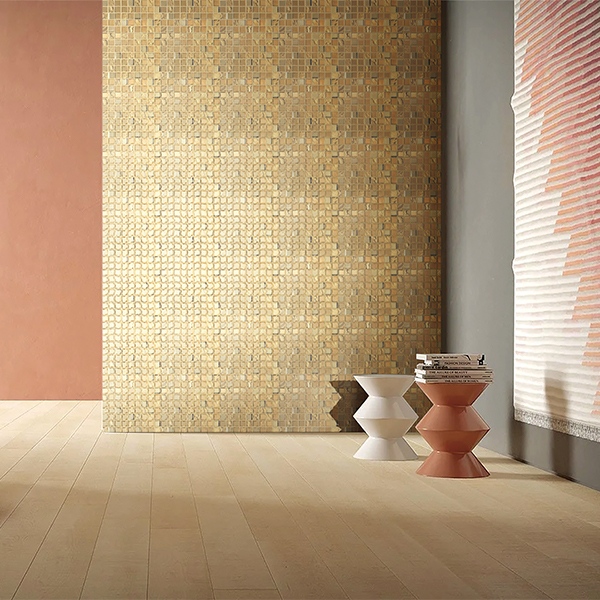
A client has signed off on the loose mosaic sample. Will the same pattern work behind a reception desk, seen from the entrance? We would hold the custom order until your team has checked that view. Even attractive chips can disappoint when sheet joints stand out or room lighting changes the color. Make the approval on a grouted mock-up, where those details are visible.
A custom look needs a defined viewing distance
Distance can hide the detail you liked in a sample. Take the sample arrangement to the counter, then look back at it from the entrance. Are you still seeing the motif, or has it become a patch of color? We would spend on the details your visitors can actually see.
For a custom mosaic tile floor, put the door openings on the pattern drawing. Include the adjacent finishes too. Imagine a border running neatly around the room, then reaching a doorway with room for only part of its motif. Where should it stop? Your layout should answer that before the installer has to make the decision with a cutter.
A different color mix is one kind of custom order; a picture assembled from individual pieces is another. Describe which you mean in the brief. These are different production questions. Guanyu Ceramics offers OEM/ODM services covering sizes, patterns and color matching; confirm what is feasible for your chosen material before treating a rendering as a production specification.
Material and shape determine the visual language
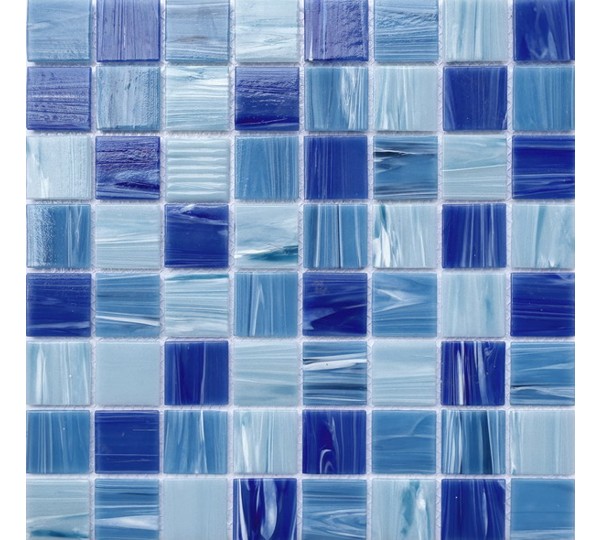
The light falling on a mosaic is worth checking before you settle on its material. We offer laminated glass combined with inkjet printing among our glass mosaic tiles. For porcelain, your shape choices include circles, strips, arrows and feathers. Reflective glass may suit your wall; a quiet pattern may work better underfoot. Bring the sample into that setting before choosing the palette.
Strip patterns need modules
With our porcelain mosaic strip range, the direction of the lines becomes part of your layout. Horizontal lines can repeat along a counter front; a change in orientation can mark a separate area. Draw the turn at the corner: will the strip continue, be cut, or end against a trim?
In the Guanyu porcelain mosaic stripes series, the listed format is 296 × 300 mm. Light green, ocean blue and dark green are among its colors. The format gives your team a starting module for planning. Confirm joint allowances and actual delivered dimensions before fixing the setting-out drawing; a nominal module alone cannot determine every perimeter cut.
Material suitability remains a separate decision from appearance. A wall photograph does not establish that its mosaic is suitable for a busy floor or wet area. For each proposed location, request the applicable product information and confirm the finish, installation system and use conditions. Do not infer slip performance from chip size or the number of joints.
The grout belongs in the color approval
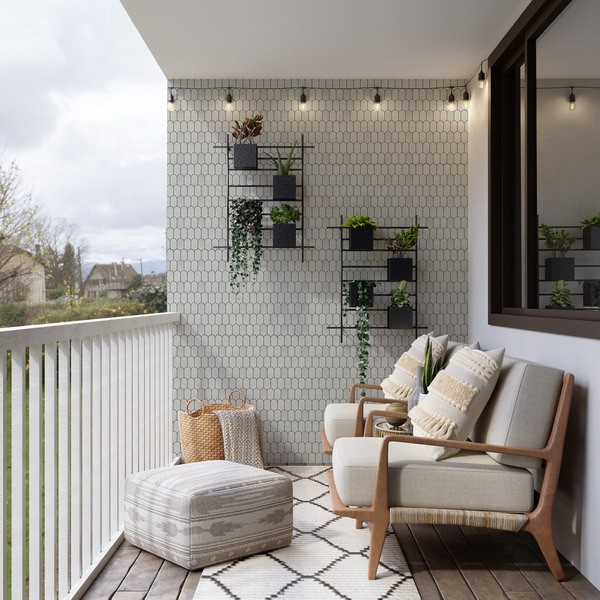
Try the same chips with two grout colors on your sample board. With a strong contrast, the joints may become the first thing you see; with a closer match, the chips may read together. We would make that choice under the planned room lighting. Empty gaps leave that part of the color decision unresolved.
Transparent and translucent glass deserve particular care because shadowing from behind the pieces may remain visible. LATICRETE addresses this in its glass mosaic guidance and recommends checking acceptance on a mock-up. Your sample therefore needs the proposed setting material and grout, rather than loose glass placed against a convenient white background.
An installed sample should cross sheet boundaries. Put sheets side by side and look along the joint where the edges meet. Does it stand out from the spacing inside the sheets? If the design wraps around a counter, have the mock-up wrap around too. Approving the sample then answers a practical question: can this pattern continue convincingly beyond its packaging unit?
A repeat drawing keeps the batch coherent
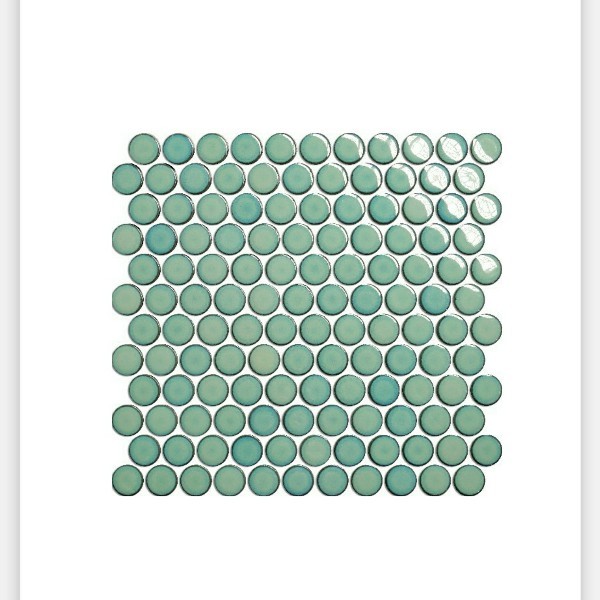
The repeat drawing connects your approved sample to the full installation. Mark the pattern direction, repeat dimensions and position of any feature motif. At an adjoining wall, draw where the lines meet. Add dimensions from the corner to the motif and arrows for the sheet orientation. The installer should not have to recover that information from a photograph.
When ordering bulk mosaic tiles, you may have a custom panel surrounded by a plain field. Give each a separate description and quantity. If your lobby design places a decorative panel inside a repeated field, label the corresponding areas on the drawing. Your receiving team can then compare the cartons with a named part of the design.
The signed-off physical sample still has a job after approval. Pass it to the people checking the shipment, then keep it available beside the installation. Record what variation your team has accepted alongside it. A phone photograph is handy for discussing the motif, but changing the screen brightness should not change your acceptance reference.
Who confirms the opening before production? Put a name or role against that task in your mosaic tile wholesale brief. An adjoining finish may have moved since the first drawing. For a custom image, even a small layout revision could put a cut through a recognizable detail; check the current measurements before releasing that panel.
Carry the approved look through to installation
A successful custom mosaic brief links the room view to a repeat drawing and an installed sample. Once those references agree, purchasing can describe the batch more precisely and the installer can judge the result against something tangible. Keep the approved references together through delivery and setting out.
Share your layout and intended application with Guanyu Ceramics, along with the material effect you want. We can then narrow down which product options to discuss for your sample.
أسئلة متكررة
Can an existing mosaic shape create a custom design?
Yes. A change to the color placement or the direction of the repeat may be enough for your design. Check the available variations before commissioning a new shape.
Should a floor and feature wall use the same mosaic?
Treat the floor and wall as separate applications when checking the product information. If the mosaic suits only one location, use a second product to pick up the same colors on the other surface.
How much of the pattern should the sample show?
Include enough sheets to reveal the repeat and its boundaries. For a logo, examine a small detail at arm’s length and check the full design from where visitors will see it. That covers both the assembly detail and the legibility of the image.
Can a border be adjusted after the main pattern is approved?
Yes. Show the changed border on the drawing before approving it for production. Changing its width takes space from the central field or gives space back, so check where the motif and perimeter cuts now fall. Reapprove the affected layout and any sample detail that changes.
What should we keep for future replacement orders?
Retain the product identification, approved sample, repeat drawing and batch details. Discuss spare material with the project team; a later order should not be assumed to match the original batch exactly.

أفضل منتجنا
المنتج الذي نقدمه

اتصل
كيف يمكننا مساعدتك!

شهاداتنا
ما يقولون عنا