
أخبار
Matte vs Polished Glazed Tiles: Use and Care
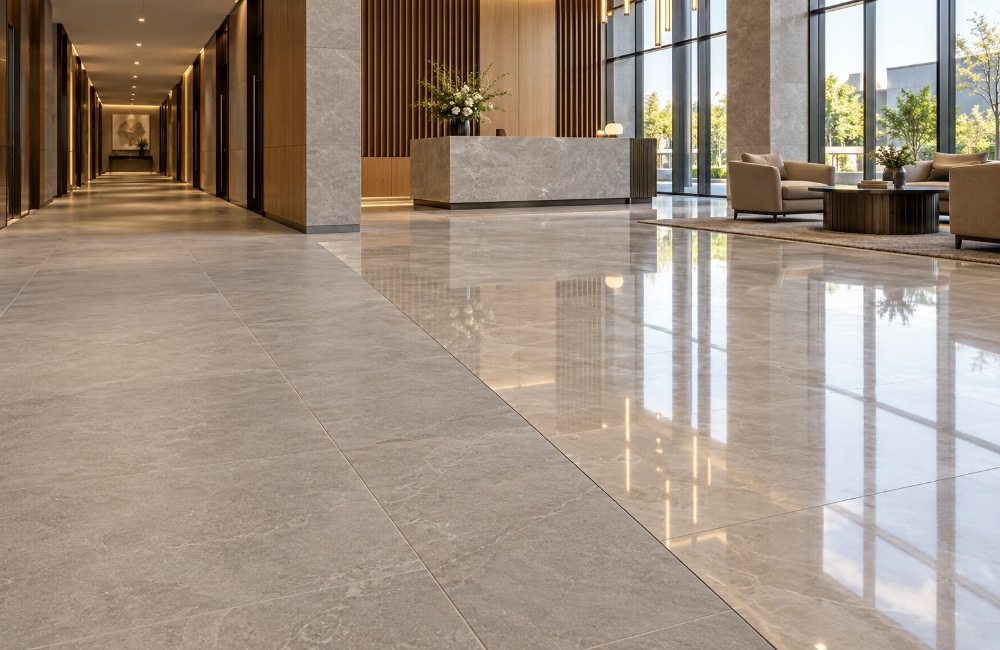
The polished sample catches your eye first. Does that make it the right choice for a whole hotel corridor, or for the wall beside a basin? We wouldn’t decide from the display alone. Take the matte option into the room as well. Later, give both to the cleaning team for a trial.
The View from the Doorway
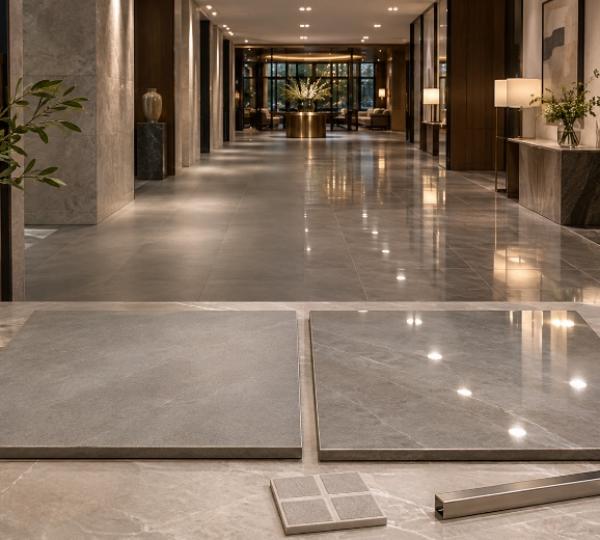
Leave the counter sample and a piece of trim beside the tiles. Then step back to the doorway. Which finish would you want a guest to notice on arrival? That is a different view from the close-up photograph you may have used to build the shortlist.
Try another position: below the corridor ceiling spots, for example, then beside the washroom mirror. We are looking at the same tile, but with light coming from different places. It’s worth doing this before carrying a single finish through the whole building.
Matte often fades into the room from the doorway. Come closer and the texture takes over. A polished tile announces itself earlier. That is an effect we’d consider for a shaded reception wall, then look at more cautiously beside a bright window.
Matte porcelain tiles deserve a hands-on comparison. Pick up the shortlisted samples: does a cloth glide across one but catch on another? We would record which sample has which texture. When the schedule simply says ‘matte’, the cleaning team loses that distinction.
Switch the Lights On
The phone photo is useful until someone asks, “Is that grey or blue?” Exposure and white balance have changed the answer. Keep the product code in view, but sign off the actual tile.
Check the Sample in Its Intended Light
Take it to the window around midday. Look again under the showroom lights. Dark matte surfaces can show dust; “matte” also tells you nothing about how much texture a cleaning cloth will catch. Feel the face.
After wiping a polished glazed tile, look along its face towards the window. A head-on view can miss a streak that shows from there. Come back when the sample is dry. If the result is disappointing, check the care advice before experimenting with a rougher pad.
Daylight is a good second opinion.
Wait for the rinse water to disappear.
Check floor performance on its own.
Bring Housekeeping into the Choice
Before the sign-off, pass the samples to housekeeping. The discussion may quickly move from color to a tight corner or a question about the equipment. Good: these are the people who will live with the cleaning routine, and we can still change the selection.
Imagine the same finish beside every basin in a guest-room scheme. Even a minor cleaning difficulty would be repeated from room to room. That’s a useful reason to try the grout at the same time as the tile, while changing either is still a sample-stage decision.
Try the Daily Wipe-Down
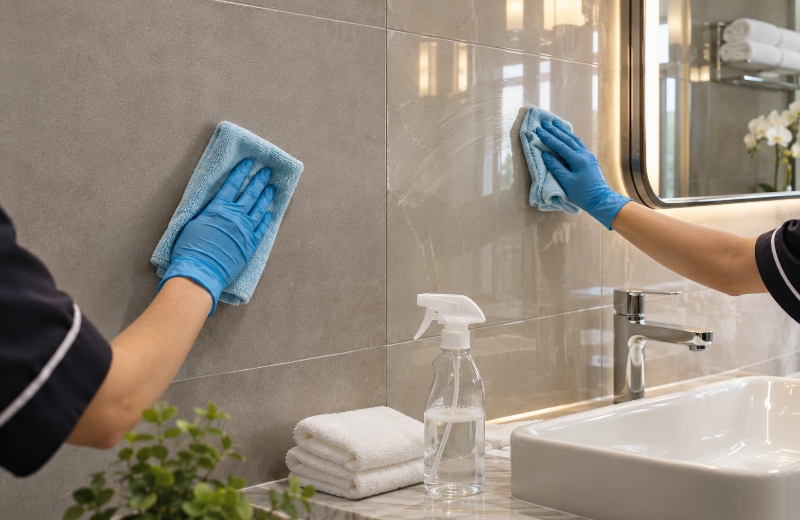
Use the proposed cleaner and the tile’s care advice for an ordinary wipe-down. No special treatment for the sample. Once it is dry, look at it again: is this a result your team would be happy to see across the building? The trial helps with that practical question, without replacing laboratory stain testing.
Try the shortlisted matte ceramic tiles one texture at a time. We’d keep the cloth and cleaner the same for this comparison, within the care instructions. Record what was used beside the result; a successful trial is much less useful if nobody can repeat it at handover.
|
Comparison |
Matte Glaze |
Polished Glaze |
|---|---|---|
|
ضوء |
Diffuses direct reflection; inspect shade close up. |
Creates clearer highlights; check the window and installed lamps. |
|
Visible marks |
Depends on surface texture and color. |
Streaks and water marks may stand out in reflected light. |
|
تنظيف |
Test the planned cloth and cleaner on the exact tile. |
A smooth face may wipe easily; inspect it again after drying. |
|
Floor use |
Sheen does not establish traction. |
Check product evidence for the intended floor conditions. |
|
Repeat order |
Record the approved code, finish, size, and sample. |
Confirm the same details before ordering each format. |
Choose Room by Room
We would not choose one finish for the restaurant entrance, guest bath, and display wall just to simplify the schedule. Start with the use. Compare looks after that.
Picture the polished option on the reception wall, where some reflected light might be welcome. Now picture it next to a screen. We might choose differently there. The bathroom introduces water as well: assess the basin wall and shower wall separately, even when you want the colors to match.
The floor discussion needs a different set of information. Put the appearance samples aside and open the performance documents for the shortlisted item. Do those documents address the conditions in your room, including water where relevant? We wouldn’t settle this part of the choice by looking at the sheen.
From the Chip to the Wall
For the first shortlist, we would stop at two samples, labelled with their codes. Put some grout and the neighbouring finish beside them. Build a larger mock-up only when you need to see a run of tiles to settle the choice.
The larger layout has a different job. You want to see the pattern repeat and the joints across several pieces, not simply judge another chip. Leave the original sample beside it. If the larger surface feels busier than expected, this is a useful moment to change the selection.
Keep the Choice Clear at Handover
The drawing needs more than a note saying ‘grey tile’. Give each finish its code, size, location, and sample reference. Where matte meets polished, draw the junction. That small piece of information saves the installer from having to choose between two similar cartons on site.
Pass on the care instructions with the signed selection. For a floor, include the relevant performance evidence as well. The team receiving the delivery should be able to match a carton to a sample and a location without tracking down the person who chose it.
If you have a Guanyu Ceramics shortlist, اتصل بنا with the sample codes. Include the room drawing and tell us about any cleaning routine you need to keep. Those details give us a useful basis for discussing the finishes.
أسئلة متكررة
Are Matte Tiles Easier to Clean Than Polished Tiles?
We’d try both before making that claim. Clean a smooth matte sample, a textured matte sample, and the polished option using their permitted routines. Include grout. The dried results will tell you more about the work involved than the sheen labels do.
Do Polished Glazed Tiles Show More Marks?
Sometimes. On the sample, look for a streak from more than one angle; then move it out of the window light and beneath the proposed lamps. That gives you a much better basis for choosing than the finish name.
Are Matte Tiles Always Safer for Floors?
No. We’d need the slip-performance evidence for that item and the intended conditions. A dull-looking surface isn’t, by itself, a floor approval.
Can Matte and Polished Tiles Be Mixed in One Project?
Yes. We’d draw the junction and put the actual edges together while the choice is still open. Two similar colors may come in different thicknesses, and each item still needs its own code and location on the schedule.
What Does “Polished Glazed Tile” Mean?
It means the glazed face has been polished. There is also polished porcelain without a glaze, which is a different description. For a question about care, we’d start with the actual code on your sample.

أفضل منتجنا
المنتج الذي نقدمه

اتصل
كيف يمكننا مساعدتك!

شهاداتنا
ما يقولون عنا