

أخبار
Sintered Stone Edge Chips: Repair or Replace?
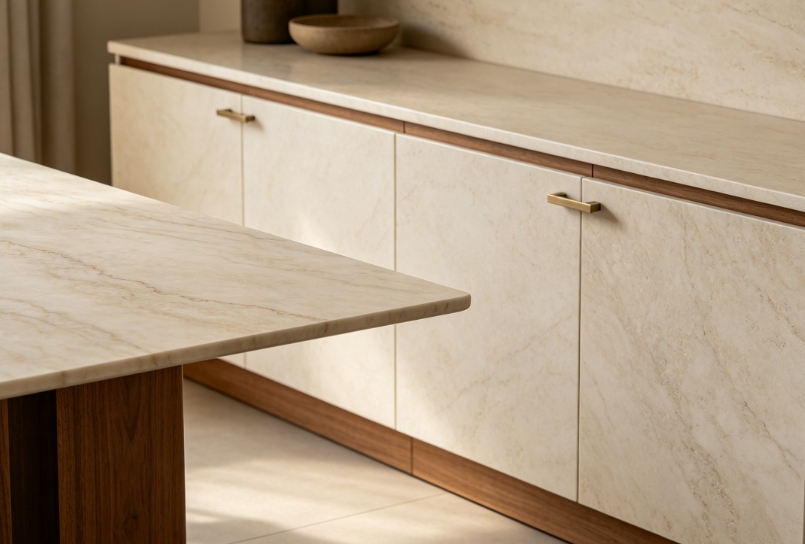
An edge chip can turn a finished counter into unfinished business. Leave it, fill it, or take the top out? A distributor receiving a close-up has little basis for choosing. There may be more damage outside the frame. Even if the chip is isolated, “repaired” might mean one thing to the contractor and something quite different to the client who will look at that edge every day.
A Chip and a Crack Need Different Decisions
The most useful photograph includes the setting around the chip. Keep a close view with a scale, then step back until the sink edge or whole corner is in the frame. Send both. Cleaning it up for the photograph achieves little; the repairer needs to see the condition as it is, before any filling begins.
Movement is a reason to stop the cosmetic discussion. An opening seam or a line running away from the chip belongs in an inspection by the fabricator and supplier, along with any movement at the edge. Leave the area as it is for that visit. Once filler covers it, part of the evidence they needed may be hidden.
Product identity is easy to lose in a repair enquiry. Two white tops might belong to the same sintered stone surface collection yet differ in finish or edge construction. Include the original item reference and thickness. Otherwise, the repairer is being asked to recommend a method for a surface they have not identified.
What a Local Repair Can Realistically Offer
Colour Is Only Part of the Match
The colour match can be convincing and the repair still visible. Imagine a dark vein crossing the missing fragment: filling the hole with white resin leaves a break in that vein. Or walk past a glossy edge and watch the reflection change at the patch. These are useful things to discuss with the client before promising a result.
The viewing position deserves a place in that discussion. A chip beneath an overhang and one on a reception counter are not equally conspicuous. Inspect the proposed result from normal standing or seated positions, under the installed lighting. A close photograph alone is a poor acceptance standard for either location.
The Remaining Edge Still Matters
The material left around the chip gives the repairer something to assess. Is it sound, and will the proposed filler work with it in this location? Have that conversation before comparing colours. Curing and service limits belong to the filler too; they do not come automatically from the specification for the original slab.
Restoring the outline of an edge and restoring a damaged detail’s strength are separate matters. Near a sink cut-out, for instance, the missing fragment is only part of what the fabricator should inspect. Keep any promise about the result tied to that inspection. A rule that calls every chip below a certain size “repairable” leaves out too much.

The Repair-or-Replace Discussion
| Observed condition | What needs deciding | Useful next step |
|---|---|---|
| Local edge chip; no other change apparent | Can the specialist repair it to an acceptable finish? | Request inspection and an appearance proposal |
| Chip beside an opening or joint | Is the damage limited to the edge? | Have the fabricator review the surrounding detail |
| Crack, movement or an opening seam | Is there a support or installation issue? | Resolve the cause before agreeing on a cosmetic treatment |
| Visible repair would be unacceptable | Can replacement achieve the required match? | Compare an actual replacement sample and removal plan |
Acceptance depends on where people see the repair. A front corner at a reception desk deserves a different appearance discussion from an edge tucked under an overhang. The table is a way to sort those questions, not permission to fill a chip without inspection. “Minor damage” in an email is not an agreed finish.
A new piece is not automatically a perfect match. Ask what will actually be supplied, and compare a sample with the pieces staying in the room. Then ask how the old one comes out. If the backsplash meets it tightly or the cabinet needs protection, that work belongs in the proposal too.

Replacement in a Finished Interior
Removal can be the difficult part of replacing sintered stone countertops. With a sink below and a backsplash above, the top may not simply lift out. Ask for the sequence on a drawing: what comes out first, what stays, and who returns the fittings to service? Those tasks need owners before the removal starts.
Samples should include the replacement edge. A face sample might match beautifully while leaving the exposed side unresolved. Hold both beside the retained finish, with the pattern in its intended direction. If the original batch cannot be supplied, approve the visible transition before cutting; the colour name on an order is not enough.
A damaged sintered stone tile raises a related access question. Can the installer remove that unit without compromising the surrounding work? Ask before ordering a single replacement. When comparing sintered stone tile options, retain the item reference with the physical sample; those two together are a better starting point than a room photograph years later.
Details Worth Keeping at Handover
A short record makes a later damage review much easier. The maintenance team should not have to identify a surface from an old room photograph. Keep these items with the project handover:
Product code, finish, thickness and any batch reference available.
Approved edge detail and a photograph of the completed surface.
Fabricator and installer contacts, plus the applicable care instructions.
Location of retained samples or spare pieces.
Any repair already completed, including its agreed appearance and care limits.
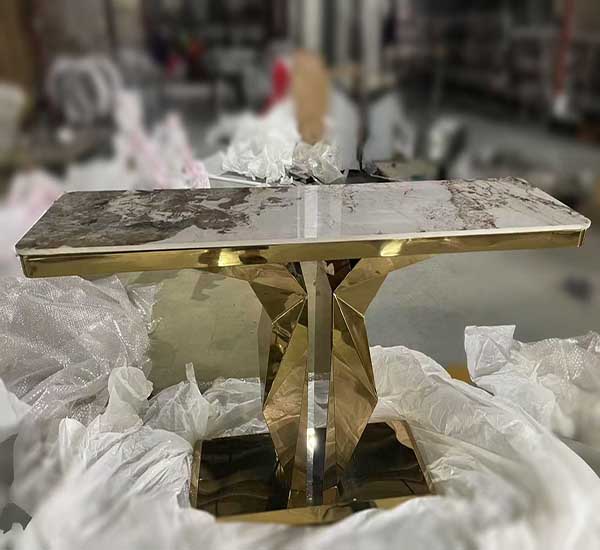
Furniture photographs need to include the support. Stand back from sintered stone furniture surfaces until the frame is visible, not just the damaged edge. The assessor can then see how the top sits. Keep the resulting recommendation attached to that furniture item; a wall panel in the same room is a separate detail.
Identification may be the first help a supplier can provide. In the Guanyu Ceramics range, tiles, slabs and sintered-stone furniture can appear in the same project. An item reference tells the supplier which piece is in question. Include it with the photographs, even if the finish seems distinctive enough to recognise.
A Decision Based on the Whole Detail
Agree on a remedy after the inspection and the appearance discussion. A repair proposal needs both: an answer about the damage and a finish the client accepts. Cracks, movement or uncertain support must be resolved. If repair is rejected, compare the replacement sample and removal plan together before approving the next step.
Have a damaged Guanyu Ceramics surface to identify? Contact us with the item reference and location, plus close and wide views of the affected area.
أسئلة متكررة
Can a Chipped Sintered Stone Edge Be Repaired?
Possibly. Let a specialist see the damage and identify the product first. The method, and any materials bought for it, should follow that assessment.
Will a Repair Be Invisible?
Not necessarily. Matching white filler to a white surface does not recreate a missing vein or the original reflection. Discuss what will remain visible, and get agreement on that appearance.
Does a Small Chip Mean the Slab Must Be Replaced?
No. A crack beside a tiny chip changes the assessment, as does a particularly visible location. Have the damage inspected and discuss the expected finish rather than deciding from the fragment’s size.
Can a Countertop Repair Method Be Used on Tile?
Only after confirming it for that tile and application. A similar colour or material label is not enough to transfer a repair procedure between products.
What Should Be Sent to the Supplier First?
The supplier needs the product reference and a view of the whole detail, as well as a close view of the chip. Include the finish and installation location. Mention any movement, crack or altered joint, and arrange the review before touching up the damage.

أفضل منتجنا
المنتج الذي نقدمه






اتصل
كيف يمكننا مساعدتك!

شهاداتنا
ما يقولون عنا