أخبار
Sintered Stone vs Vitrified Tile for Projects
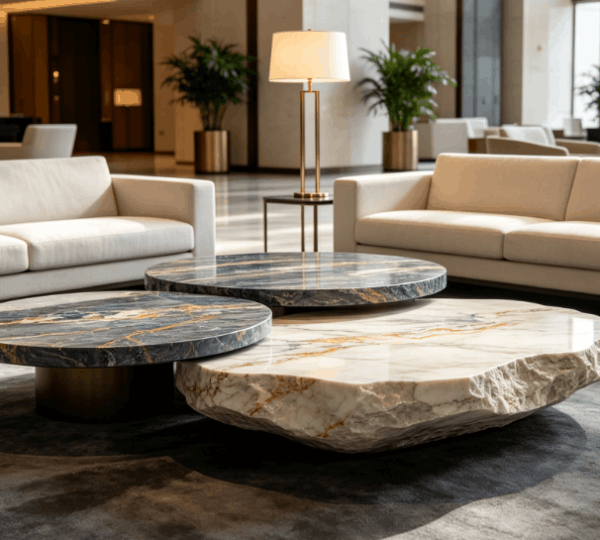
Project buyers frequently weigh surface materials by name first. They look at performance second. This habit creates confusion. Materials like vitrified tile, porcelain slab, fully sintered tile, and sintered stone might overlap visually. However, they serve very different fabrication and installation needs. The smarter question is where the surface will actually go. Buyers must also ask how workers will process it. Finally, they need solid evidence to support the claimed performance.
Surface labels change across different markets. A vitrified tile typically means a dense ceramic tile. It features low water absorption. On the other hand, sintered stone generally refers to mineral slabs. Manufacturers design these for larger architectural spaces and furniture faces. Both options can mimic marble, concrete, or natural stone. Therefore, a simple visual check does not finalize the choice.
Guanyu Ceramics supplies polished porcelain, matt tile, wall tile, slabs, and sintered stone within its tiles and slabs range. That portfolio makes the comparison practical for buyers who need several surface formats in one project. A floor may need durable vitrified porcelain tile, while a counter, feature wall, or furniture face may need a larger sintered stone slab.
How the Two Surface Types Usually Differ
Format and Installation Logic
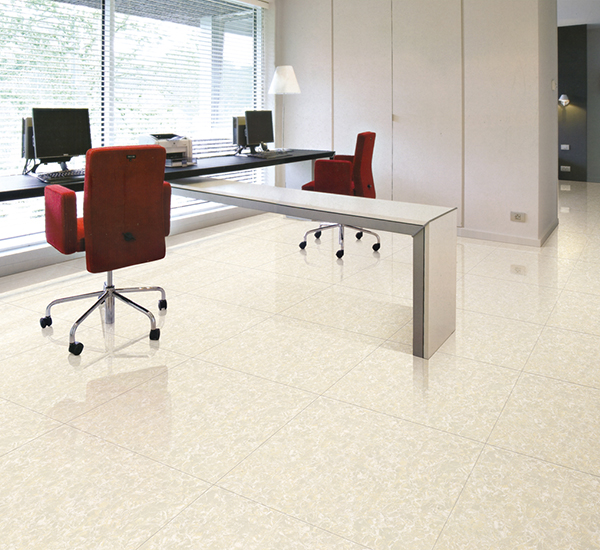
Vitrified tile is often selected as a modular floor or wall finish. Guanyu tiles and slabs include polished porcelain and matt porcelain products with water absorption below 0.5%, rectified edges, and high-traffic positioning. Those traits support repeatable room-by-room installation in commercial interiors.
Sintered stone is usually considered when the project needs broader visual continuity or fabricated parts. Guanyu sintered stone options include a 1200 x 2400 x 9 mm luxury marble and quartzite collection, 6 mm UV-printed slabs, and slab-integrated cabinetry details. These details make sintered stone vs vitrified tiles a question of application, not just prestige.
Performance Claims That Buyers Should Verify
Both materials can be strong, low-absorption, and easy to clean when they are selected correctly. The project risk appears when a buyer assumes every product in a category performs the same way. The actual data sheet should confirm water absorption, finish, abrasion resistance, slip behavior, stain resistance, heat resistance, and approved application.
International ceramic tile classifications such as ISO 13006 and EN 14411 are useful because they connect tile groups to water absorption and test methods. For slab and furniture uses, buyers should also request product-specific fabrication guidance, because edge cutting, drilling, support, and handling can decide whether the installed surface performs well.

Application Mapping for Commercial Buyers
The best material choice follows the surface duty. Floors need slip behavior, abrasion resistance, cleaning practicality, and replacement consistency. Walls and feature panels need visual continuity, flatness, and installation control. Furniture surfaces need edge strength, support structure, stain resistance, and safe export packing.
| Project surface | Vitrified tile advantage | Sintered stone advantage |
| Main floors | Repeatable modules and proven floor installation | Useful when large slabs are approved for the floor system |
| Bathroom walls | Cost-efficient coverage and easy replacement | Fewer visual breaks for premium wall design |
| الجدران المميزة | Works for standard tile layouts | Large marble-look panels and custom UV printing |
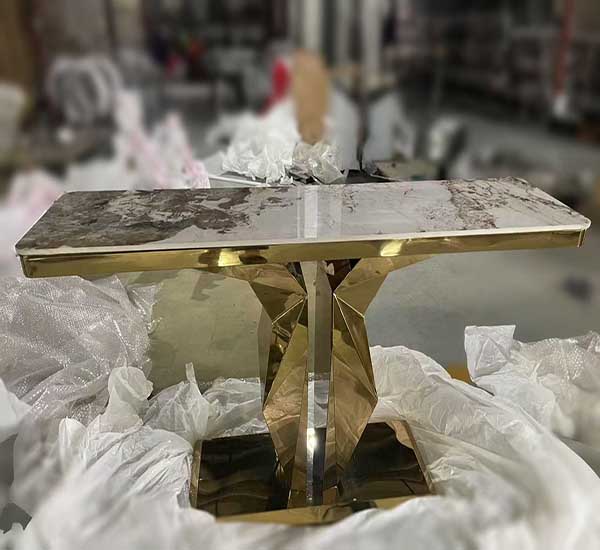
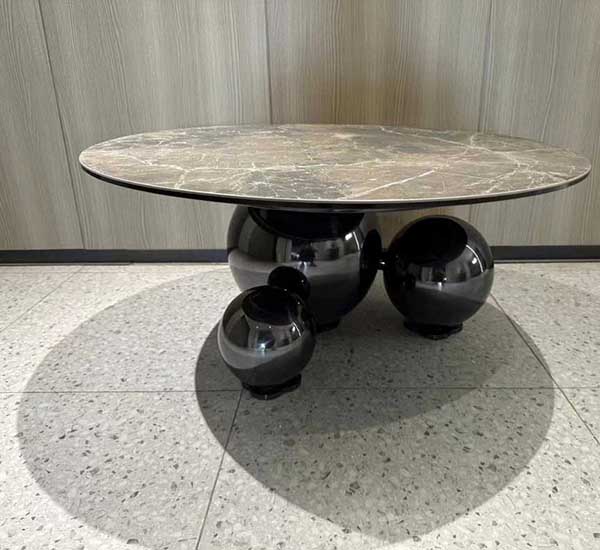
| Counters and tables | Limited unless the tile is part of a designed system | Better fit for fabricated tops and furniture faces |
| Export replacement | Smaller units are easier to replace | Batch and pattern control need early planning |
A project can use both materials intelligently. Vitrified porcelain may handle corridors, rooms, and dry-zone floors, while sintered stone can create a reception counter, statement wall, or tabletop program. This mixed approach avoids overpaying for premium slabs where modular tile already solves the problem.
Procurement Checks Before Approval
A buyer should compare exact products rather than generic categories. Useful checks include the intended area of use, water absorption, surface finish, slip data, cutting tolerance, batch consistency, carton protection, and replacement availability. For بلاط متلبد بالكامل or slab projects, fabrication drawings and sample approval are as important as the slab pattern.
- Match the material to floor, wall, countertop, furniture, or decorative panel use.
- Request current product data for absorption, finish, stain resistance, and approved application.
- Review edge details, cutouts, backing, and support for slabs or tabletops.
- Confirm batch control, carton protection, spare quantity, and destination documentation.
Cost comparison also needs discipline. A low unit price can become expensive if the material breaks during cutting, needs extra support, or cannot be replaced consistently. The better calculation includes yield, fabrication waste, installation labor, freight, damage risk, and long-term maintenance.

Where Guanyu Ceramics Fits the Decision
Material planning becomes easier when one supplier can discuss several surface categories without forcing every project into one product. Guanyu Ceramics has worked in building materials since 2001 and supplies ceramic tiles, mosaics, slabs, flexible stone, furniture, lighting, and related products through global distribution channels. Its management systems include ISO 9001, ISO 45001, and ISO 14001 standards.
The company also offers OEM/ODM support for custom sizes, patterns, and color matching. Buyers comparing vitrified tiles, matt porcelain, polished porcelain, slabs, and sintered stone can use one specification discussion to separate floor needs from wall, furniture, and decorative surface needs.
Summary for Surface Selection
Sintered stone is not automatically better than vitrified tile, and vitrified tile is not automatically too basic for commercial work. The right choice depends on application, format, fabrication, installation, finish, and verifiable product evidence. Buyers should specify the installed surface first, then select the material name that fits that duty.
For mixed commercial projects, Guanyu Ceramics can help compare tile, slab, and decorative material options against project drawings and use conditions. Send floor areas, wall elevations, furniture details, target finishes, and destination needs through the صفحة الاتصال الخاصة بشركة غوانيو سيراميكس for project-specific support.
أسئلة متكررة
Are sintered stone and vitrified tile the same material?
They are not usually treated as the same purchase category. Vitrified tile is commonly a dense ceramic tile format, while sintered stone is often specified as a larger slab or fabricated surface.
Which material is better for commercial floors?
Vitrified porcelain tile is often practical for commercial floors because it is modular, replaceable, and familiar to installers. Sintered stone may work when the exact slab is approved for the floor system.
Which material is better for tabletops or counters?
Sintered stone is usually a stronger candidate for tabletops, counters, and furniture faces because large slabs can be fabricated into broader surfaces. The support and edge design still need confirmation.
What data should importers request before ordering?
Importers should request water absorption, surface finish, abrasion or scratch information, stain resistance, slip data when relevant, packing method, batch control, and application guidance for the exact product.
Can one project use both vitrified tile and sintered stone?
One project can use both materials effectively. Vitrified tile may suit floors and standard walls, while sintered stone can serve counters, furniture, feature walls, and premium visual areas.

أفضل منتجنا
المنتج الذي نقدمه

اتصل
كيف يمكننا مساعدتك!

شهاداتنا
ما يقولون عنا