
Actualités
Fully Sintered Tile Prices Beyond Square Meter Cost
A fully sintered tile quote can look competitive until cutting, finish control, packing, breakage, and replacement risk are added to the project cost. For importers and commercial buyers, the smarter comparison starts with what the quoted square meter actually includes.
A Low Unit Price Can Hide Project Cost
The quoted price per square meter is only one part of a fully sintered tile purchase. Thickness, surface finish, print quality, slab size, fabrication, packaging, and order repeatability can all change the real cost after the shipment reaches the project.
A buyer should treat the cheapest quote as a question rather than an answer. If two quotes differ sharply, the difference may come from material grade, production tolerance, finish process, packing method, or the level of service included before loading.
Specification gaps change the comparison
Quotes are hard to compare when one supplier includes only basic slabs while another includes cutting, edge treatment, matching control, or stronger export packing. The apparent savings may disappear when the missing work is purchased later.
Replacement risk has a cost
Large-format sintered surfaces can be expensive to replace after breakage or shade mismatch. A fair quote should reduce that risk through consistent production, sensible packing, and clear confirmation before shipment.
|
Quote item |
Why it affects price |
Buyer check |
|---|---|---|
|
Thickness and format |
Larger or thinner panels need tighter handling |
Confirm size, thickness, and tolerance |
|
Finition de surface |
Matte, polished, and printed finishes use different processes |
Review samples under project lighting |
|
Fabrication |
CNC cuts and mitered edges add labor |
Separate slab price from processing cost |
|
Packing |
Export protection reduces breakage risk |
Ask how panels are packed and labeled |
Look at the Material Role in the Project
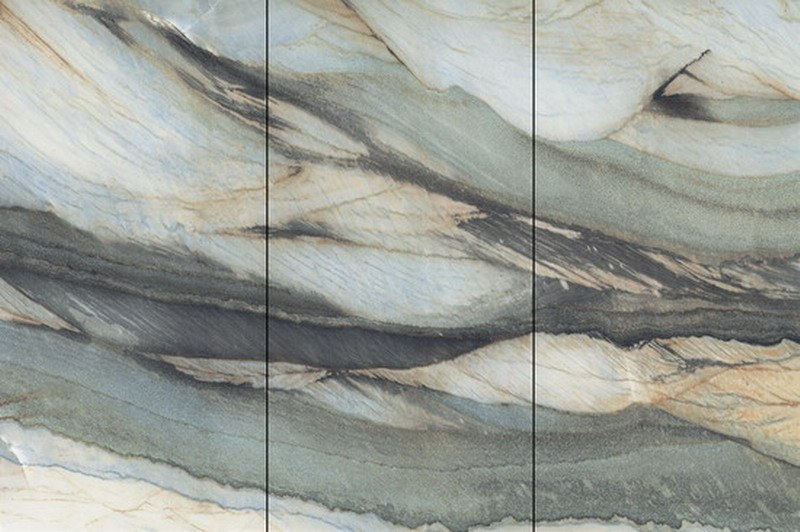
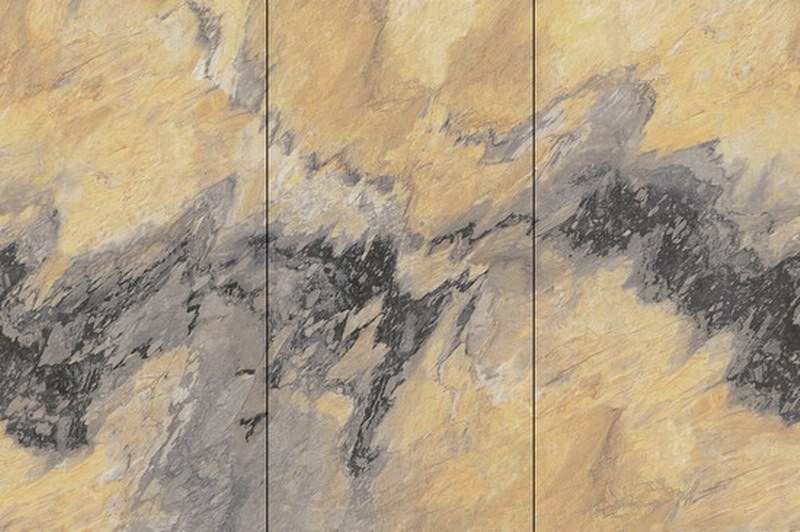
Fully sintered tile is often selected because it can replace heavier or less flexible surface materials in walls, floors, furniture, and feature panels. That role matters because the same product may carry different cost expectations in a hotel lobby, retail wall, cabinet surface, or decorative panel.
Guanyu Ceramics supplies tiles, slabs, and sintered stone surfaces for decorative building projects, including large-format slab and digitally printed surface applications. Buyers reviewing fully sintered tile price details should connect the quote to the exact application instead of comparing the number in isolation.
For flooring, confirm wear expectations, finish, and carton consistency.
For walls, check size tolerance, flatness, and visual matching.
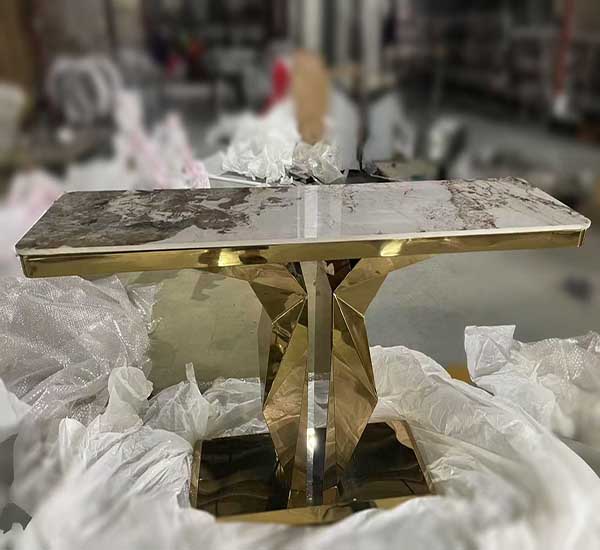
For furniture or counters, separate slab cost from fabrication work.
For art slabs, confirm print quality and color approval process.
Delivered Cost Is More Useful Than Factory Price
Delivered cost gives buyers a better view of commercial value because it includes export packing, loading efficiency, breakage allowance, communication time, sample approval, and replacement coordination. These items are easy to overlook when a quote is reduced to square meters.
The same thinking applies to internal purchasing approval. A procurement team may prefer the lowest factory price, while the project manager needs fewer delays, fewer shade disputes, and a product that contractors can install without repeated clarification.
A useful quote therefore explains what risk has already been managed by the supplier. If the supplier has clarified finish, packing, labeling, and inspection before shipment, the buyer can compare the price against fewer unknowns.
Un cheap fully sintered tile quote may still work for a simple project if expectations are modest and the specification is stable. For public-facing commercial interiors, however, a slightly higher quote can be safer when it reduces quality disputes and late replacement pressure.
Packing and loading affect usable value
Large panels need careful packing because one damaged carton can delay an installation sequence. Buyers should ask whether the packing approach matches the panel size, route, and unloading method.
Service details affect schedule risk
Pre-shipment photos, sample approval, carton labeling, and clear product records help the importer manage communication with contractors. These services do not always appear as line items, but they influence project reliability.
How to Build a Fair Comparison Sheet
A fair comparison sheet should normalize every quote before price is judged. Buyers can list what is included, what is excluded, and what still needs confirmation, then compare cost only after the product scope is the same.
When a buyer asks for a fair price fully sintered tile comparison the sheet should include product format, finish, processing scope, MOQ, packing, sample timing, and expected use. This makes the final decision easier to explain internally.
|
Comparison field |
Quote A |
Quote B |
|---|---|---|
|
Product size and thickness |
Confirmed in writing |
Needs confirmation |
|
Finish and pattern approval |
Sample approved |
Photo only |
|
Edge or cutting work |
Included |
Quoted separately |
|
Emballage d'exportation |
Crate details provided |
Basic carton stated |
Practical Takeaway for Price Decisions
Fully sintered tile pricing should be judged by project value, not by square meter cost alone. A useful quote clarifies specification, finish, fabrication, packing, delivery risk, and future repeatability so the buyer can see the real delivered cost.
If you are comparing quotes for a commercial surface package, send the size, finish, quantity, and processing needs when you Contactez-nous so the discussion can focus on comparable pricing rather than loose unit numbers.
FAQ (questions fréquentes)
Why do fully sintered tile prices vary so much?
Prices vary because size, thickness, finish, print quality, fabrication, packing, order quantity, and service scope can differ. A low number may not include the same work as a higher quote.
Is low cost fully sintered tile always risky?
Not always. It can fit simple applications when the specification is clear, but buyers should check whether quality control, packing, and repeat supply meet the project requirement.
What should be included in a fair quote?
A fair quote should state the product size, thickness, finish, quantity, processing work, packing method, lead time, payment terms, and any excluded costs.
How can buyers compare sintered tile suppliers?
Buyers can compare suppliers by normalizing specifications first, then checking samples, production consistency, export experience, communication, packing, and replacement support.
Does fabrication change the final price?
Yes. Cutting, edging, mitering, drilling, and custom printing can change the final price because they add labor, tooling, quality checks, and breakage control.

notre meilleur produit
Produit que nous offrons

entrez en contact
Comment pouvons-nous vous aider !

nos témoignages
Ce qu'ils disent de notre