
Actualités
How Importers Read DCOF for Shower Floor Tiles

A slip-resistance number can look precise while leaving the most important project questions unanswered. Importers evaluating a carrelage de plancher de douche antidérapante should read DCOF together with water, drainage, texture, grout, cleaning, footwear, and installation conditions. The goal is a traceable decision for the actual wet area, not a universal promise that a tile can never slip.
What a DCOF result actually tells you
DCOF means dynamic coefficient of friction, a measurement produced by a defined test method. DCOF rating for shower floor is therefore evidence from a test setup, not a complete description of every installed floor.
ANSI A326.3 is commonly referenced in North American tile specifications for dynamic coefficient of friction testing and classification. The buyer should confirm which edition, test condition, classification, and acceptance language the project contract requires before treating a reported value as compliant.
The same tile can behave differently when the surface is contaminated, the slope is poor, the drainage is slow, the grout is worn, or the user is barefoot. That is why a DCOF result should be connected to the floor assembly and maintenance plan instead of being copied into a catalog line without context.
Read the report at product level
A usable report identifies the tested product, finish, size or specimen, test method, condition, date, laboratory, and result. If any of those fields are missing, the importer should treat the number as incomplete evidence until the supplier clarifies its scope.
- Match the report to the exact product code, finish, and intended installation area.
- Check whether the test condition represents wet use and whether the method is accepted in the destination market.
- Separate a product result from a company certificate or a general statement about a product family.
- Record the report revision and approval status with the sample and purchase order.
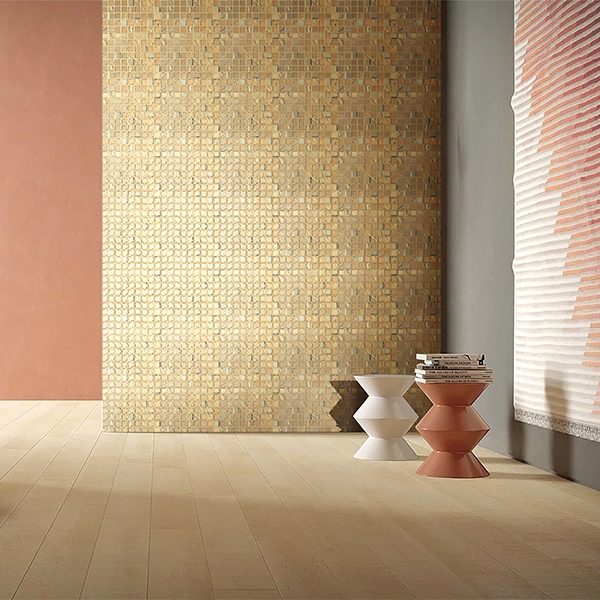
Guanyu Ceramics’ porcelain mosaic range is described as porcelain with water absorption at or below 0.5% and as suitable for walls, floors, and other surfaces. That evidence helps identify the product family, but it does not replace a shower-specific slip-resistance report or a site review of drainage, grout, and cleaning.

The floor system matters as much as the tile
Shower floor slip resistance is a system question because water must leave the walking surface quickly and predictably. A tile with a useful texture can still perform poorly when the floor lacks a suitable fall, the drain is undersized, or grout joints collect residue.
| Contrôle | Importer question | Evidence to retain |
| Tile surface | What finish and texture were tested for the selected code? | Product data, test report, approved sample. |
| Water movement | Does the layout support drainage without standing water? | Layout drawing, slope detail, drain coordination. |
| Joint system | Which grout and joint width suit the wet-area design? | Installation guidance, mock-up record, approved grout. |
| Nettoyage | What routine removes soap, oil, and mineral residue? | Care instructions, maintenance responsibility. |
| Site acceptance | Who approves the installed wet-area mock-up? | Inspection record, photos, punch-list closure. |
Why texture, format, and grout change the decision
Smaller formats can help a sloped shower floor follow contours with more joints, while larger formats can reduce joints but require tighter substrate control. Neither format is automatically safer. The selected layout must support drainage, cleaning, and the required visual result.
Grout is part of the walking surface. Its profile, porosity, color stability, and maintenance condition affect how the floor feels and how residue is removed. An importer should approve the tile, adhesive, grout, and cleaning method as one installation sample when the project has meaningful wet-area risk.

Questions that prevent a misleading comparison
A comparison becomes misleading when one supplier reports a wet test and another reports a dry test, or when one result belongs to a textured finish and the other belongs to a polished surface. The importer should normalize the test method, condition, product identity, and intended use before placing the numbers in the same table.
The buyer should also distinguish a declared value from a project acceptance threshold. A declared value may describe the tested specimen, while the contract may require a specific classification, mock-up, or local review. Those are related controls, but they are not interchangeable and should be recorded separately in the approval file.
Maintenance instructions deserve a place beside the slip report. Soap film, mineral scale, grease, and unsuitable cleaners can change the feel of a wet floor over time. A procurement team that records the cleaning method, responsible party, inspection frequency, and corrective action gives the owner a better chance of preserving the specified performance after handover.
A practical importer approval sequence
The safest approval sequence turns an abstract performance claim into a project record. It also gives procurement a clear point at which an unresolved question must be escalated instead of carried into shipment.
- Define the wet area, user profile, footwear or barefoot use, cleaning regime, slope, drain, and local code requirements.
- Request product-level reports and confirm the tested code, finish, condition, method, and date.
- Review the physical sample for texture, visual variation, cleanability, edge condition, and grout compatibility.
- Build a representative mock-up and record the approved tile, adhesive, grout, layout, and maintenance method.
- Attach the approved evidence to the purchase order and require written approval for substitutions.
Guanyu Ceramics can support the product and sample side of this process with its porcelain mosaic and wider tile range. The project owner, designer, installer, and local authority still need to confirm the complete floor design and any mandatory destination-market requirements.
Summary
DCOF is useful when it is read as a defined test result inside a wider wet-area control system. Importers should match the report to the exact tile, confirm the required standard, review drainage and grout, and approve a representative mock-up before releasing a bulk order.
For product comparison, review porcelain mosaic tile collections alongside the project wet-area brief and commercial tile and slab products. The final inquiry should state the product code, finish, format, quantity, destination, report requirement, and installation conditions.
FAQ (questions fréquentes)
What is DCOF in tile specifications?
DCOF is dynamic coefficient of friction, a measurement produced by a defined test method. It should be read with the test condition, product identity, and project acceptance language.
Is a higher DCOF always safer for a shower floor?
Not by itself. Drainage, contamination, footwear, cleaning, grout, slope, installation quality, and the tested method also affect practical slip risk.
What should a shower-floor slip report identify?
It should identify the product, finish, specimen or size, test method, condition, laboratory, date, result, and any classification or limitation.
Can porcelain mosaic be used on shower floors?
A porcelain mosaic may be considered when its exact product, finish, layout, drainage, grout, installation system, and local requirements are reviewed together.
Should importers approve a wet-area mock-up?
Yes. A representative mock-up helps the project team review texture, standing water, joints, grout, cleaning, and the relationship between the specified tile and the installed floor.

notre meilleur produit
Produit que nous offrons

entrez en contact
Comment pouvons-nous vous aider !

nos témoignages
Ce qu'ils disent de notre