

Novas
Epoxy vs Cement Grout for Commercial Tile Projects
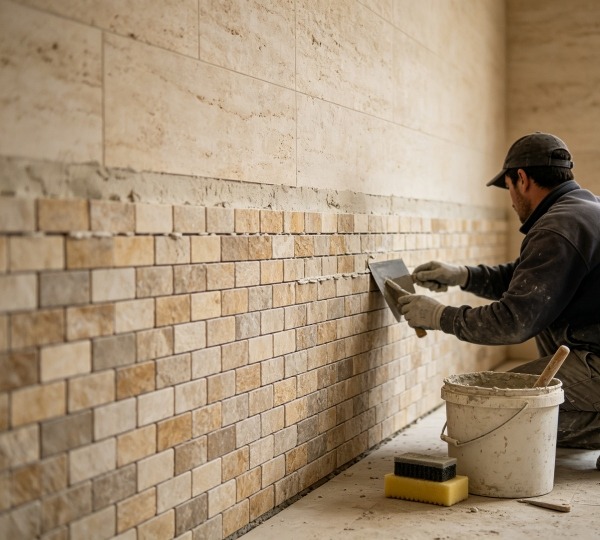
A pale grout sample looks reassuringly clean before anyone has used the floor. A restaurant buyer has to think further ahead, to grease, washing, and the staff who will deal with both. That is where the epoxy-versus-cement decision becomes useful. Compare the joint’s daily exposure and upkeep before paying a premium across an entire commercial project.
What the Grout Will Face Each Day
The missing details often sit with the cleaning team. Get the names of what reaches the joints and what staff use to remove it. A room label such as kitchen does not convey the cleaner, dilution, or contact conditions that might decide the grout selection.
The family names describe the binder. An epoxy system typically combines resin and hardener with filler; a cement grout uses a cement-based binder. Within those families, individual products have different limits. Obtain the performance information for the proposed formulation instead of extending a general comparison into an application approval.
A building-wide grout choice isn’t obligatory. Among commercial tile grout options, identify which formulation fits each exposure. Paying for extra resistance in the kitchen needn’t mean paying for the same capability in a moderate adjoining area.
Spills and Cleaning Chemicals
Oils and colored spills can make epoxy’s stain resistance valuable. Relative to conventional cement grout, its porosity is generally lower and its stain resistance higher. The cleaning chemical still needs an individual check, because resisting a stain and tolerating a particular chemical are different requirements.
Compatibility requires an identifiable exposure. Give the supplier the cleaner’s name and dilution, the contact time, and the operating conditions. Heavy-duty is a description of effort rather than a chemical specification, so it cannot establish whether the grout will tolerate the routine.
Dry Areas and Moderate Exposure
A dry corridor deserves a separate cost decision. A suitable cement product may meet its moderate exposure without the specialist epoxy chosen for another room. Check the particular formulation, and identify the benefit before carrying that premium through the whole project.
Color approval also needs the operator’s input. The pale joint on a new sample has not yet had to share a busy service route with food or tracked dirt. Ask what keeping that appearance will involve. The answer may affect the color choice as well as the formulation.
Installation Changes the Real Cost
Epoxy commonly costs more to buy. Its installed cost is less easy to generalize: a crew’s familiarity with the product, the mixing and cleanup, and the tile face all matter. Get a price for the specified work instead of assuming that a fixed percentage added to cement-grout labor will be accurate.
Epoxy mixing starts a working-time limit. The crew needs an application and cleanup plan based on the chosen formulation, and enough familiarity to estimate its output. A rate achieved with a familiar cement grout is not automatically transferable to a new system.
|
Project Factor |
Epoxy Grout |
Cement Grout |
|---|---|---|
|
Initial material budget |
Commonly higher |
Commonly lower |
|
Stain resistance |
Generally strong; confirm formulation |
Varies with formulation and treatment |
|
Sealing |
Generally does not require sealing |
Check whether sealing is recommended |
|
Aplicação |
Product-specific mixing and cleanup |
Product-specific mixing and water control |
|
Chemical exposure |
Check the resistance limits |
Check the resistance limits |
|
Return to service |
Follow the stated cure schedule |
Follow the stated cure schedule |
Tile texture can make cleanup a separate cost issue. Residue caught in a textured face may take different treatment from residue on a smooth tile. For a sensitive surface, try the grout and cleaning method on a sample first. Finding a problem there is preferable to finding it across an installed room.
Joint dimensions belong in the product selection. A comparison of joint grout for tiled floors needs the planned width and depth as well as the exposure. Confirm the formulation and approved role of each candidate. Trade names can be less precise than the project needs.

Maintenance Savings Need a Practical Calculation
A maintenance saving needs a task attached to it. Ask the operator which cleaning work would change with epoxy, how often that work happens, and what it costs. If nothing changes, the purchase premium cannot honestly be justified as a labor saving. Stain resistance may still have value, but explain that value separately.
Sealing can alter that calculation. Epoxy generally needs none; a cement product may come with a sealing recommendation for the proposed exposure. Include the relevant task in the plan, but don’t credit sealer with making the two materials equivalent. The cement joint still has its own cleaning requirements.
Cleaning doesn’t disappear with epoxy. Surface dirt and organic residue can collect on a dense joint, even though the grout has low porosity. Keep a routine for removing them. The resistance benefit should be described accurately rather than extended into a maintenance-free claim.
Return to service deserves an entry in the comparison. Foot traffic, washing, and contact with a cleaner may have different permitted times after application. For an operating restaurant, those details determine whether work fits a closure. A modest saving has little appeal if its cure schedule cannot fit the available access.

The Bonding Material Is a Separate Choice
The product’s job should be clear in the comparison. Tile mortar normally bonds from beneath, whereas grout fills between the pieces. A combined product can perform both roles within its stated uses. Establish that scope from its instructions before substituting it for separate materials.
Combined orders make it easy to blur those roles. At Guanyu Ceramics we supply tiles and mosaics as well as tile mortar, including a mosaic and glass mortar for bonding and grouting. That function belongs to the identified product. It says nothing, by itself, about epoxy chemistry or compatibility with the project’s cleaner.
The same caution applies to grout mortar for mosaic applications described as water-resistant. A floor exposed to a chemical needs a separate chemical assessment. Keep both questions on the review if both conditions will occur in service.
The final comparison should establish:
The grout chemistry and permitted joint dimensions.
Compatibility with the selected tile and cleaning method.
The cure period before traffic, washing, or chemical exposure.
Whether sealing belongs in the maintenance plan.
The installer’s price for the approved system and sample finish.
Waterproofing sits outside this material comparison. Where the assembly requires it, retain the specified system whichever grout is chosen. The same applies to movement joints. Paying for epoxy does not remove those design requirements.
A Grout Choice Matched to the Space
The buyer can make more than one justified choice. Epoxy may address a confirmed staining or chemical problem in one zone, with cement grout sufficient in another. Price those zones on their own requirements before deciding that one specification is best for the entire building.
Acceptance is easier when installer and operator share the decision. Let both inspect the sample and discuss the actual use, with installed price and upkeep available for comparison. The chosen formulation then has a specific reason for being in that space.
If your tile package needs a clearer distinction between grout and mortar, contact Guanyu Ceramics to discuss the application and cleaning method.
FAQ
Is Epoxy Grout Always Better for Commercial Floors?
Only where the additional performance is useful. A suitable cement formulation may meet a moderate exposure at a lower purchase cost. Compare the actual products against the operator’s routine before specifying epoxy throughout.
Does Epoxy Grout Need Sealing?
Usually not. Follow the product instructions and keep removing surface dirt through routine cleaning.
Can Cement Grout Be Used in Wet Commercial Areas?
Some are suitable for the intended wet use. Check that particular grout’s exposure approval, joint dimensions, and compatibility with the proposed cleaner.
Does Epoxy Grout Waterproof the Floor?
No. A water-resistant joint does not supply the required waterproofing system. Keep the specified assembly and movement details.
Which Grout Allows a Faster Opening Date?
Check the exact cure schedule for traffic and the intended cleaning exposure. Working time and return-to-service time are different measures. Neither the epoxy nor cement label alone establishes the opening date.

nosso melhor produto
Produto que estamos oferecendo



entrar em contato
Como podemos ajudá-lo!

nossos testemunhos
O que eles dizem sobre nossa