
Novas
Matt vs Polished Porcelain Tiles for Project Floors
Picking a finish seems easy when looking at a small sample. However, this choice determines how a floor performs daily. Matt and polished porcelain might have the exact same color, base material, and size. Yet, they create totally different levels of glare. They also differ in cleaning needs, stain visibility, and safety in wet conditions. Project buyers must pair the right finish with each specific area. They should avoid picking just one surface type for the whole building.
Finish changes the operating character of a floor
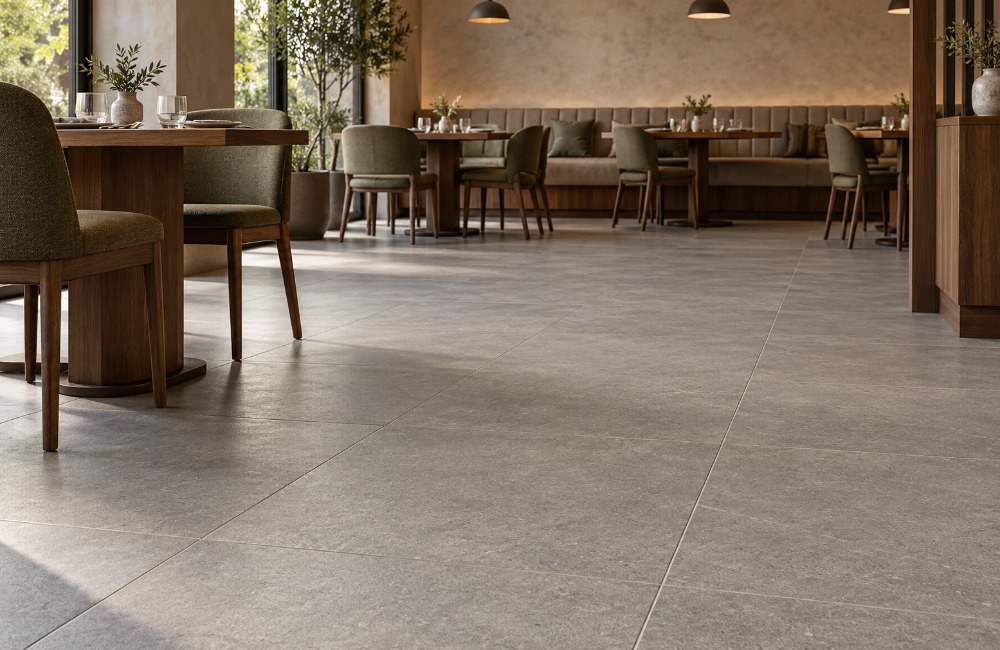
Matt porcelain scatters incoming light. It typically offers a softer, low-reflection surface. This subtle look helps corridors, hotel rooms, and public spaces feel calm. It works especially well under bright architectural lights. A textured surface might also improve grip. However, real slip resistance depends on specific test results. You cannot rely on just the word “matt” to guarantee safety.
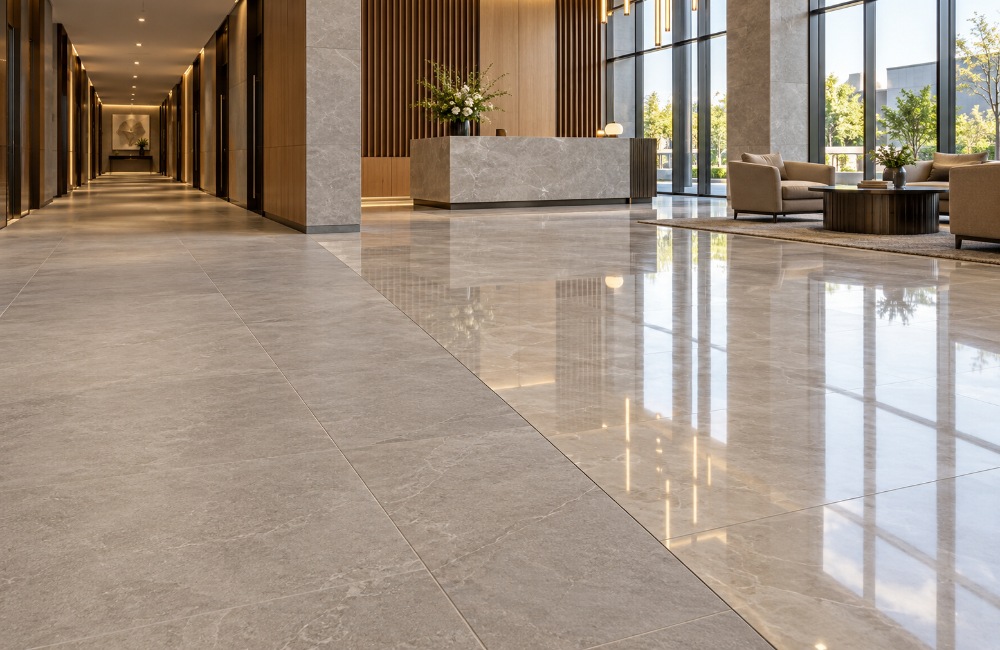
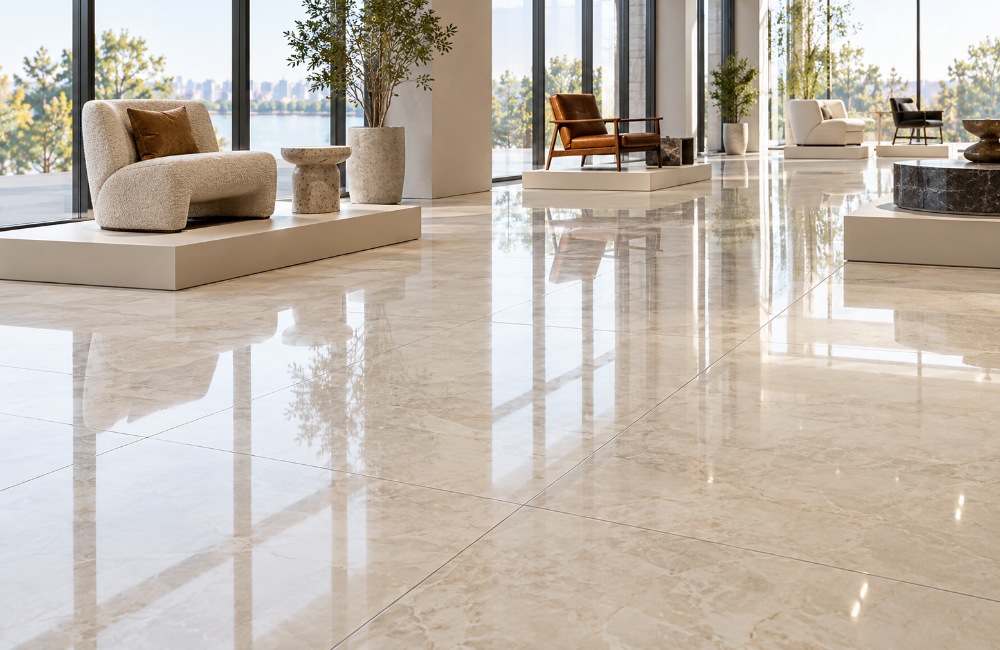
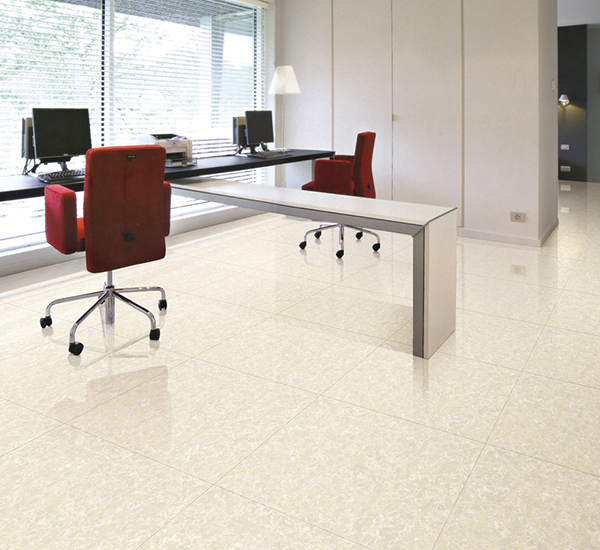
Polished porcelain reflects a lot of light. This effect makes stone patterns and colors look much richer. It works perfectly in spaces that need brightness and visual impact. Good locations include dry lobbies, reception desks, and luxury retail shops. You can also use it on specific walls. Still, this very smooth surface has a downside. It reveals footprints, dust, and water marks quickly. Tiny scratches also become obvious when light hits the floor at a low angle.
The same design can serve different zones
A well-planned building does not require the exact same finish everywhere. Designers can pick a polished version for a dry, decorative zone. Then, they can use a matt or textured match for entryways and service hallways. This rule also applies to bathrooms and other damp floors. This smart method keeps the overall design style consistent. At the same time, it handles different daily usage needs properly.
Surface names are not performance ratings
Finish names simply describe how a tile looks and how it was made. They never replace real testing evidence. Buyers must ask for the exact test methods and final scores. They should also check the test conditions and the recommended usage areas for that specific item code. A commercial matt porcelain tile range still requires written proof. This documentation confirms it fits your unique project setting safely.
Water, contaminants, and cleaning define slip risk
Slipping risks depend on much more than just surface gloss. Water, cooking oil, soap, and dust change how a floor feels. Leftover cleaning chemicals and shoe types also matter. Furthermore, floor slope, water drainage, and how people walk affect safety. A dry sample in a showroom simply cannot predict real-world daily conditions.
Wet areas require very careful planning. Dirt and liquids completely change the grip between shoes and the tile. Commercial kitchens deal with heavy oil and dropped food. Hotel entryways constantly handle rain brought in from outside. Bathrooms mix standing water, slippery soap, and bare feet. A truly safe choice links official test results with the exact types of spills expected. It must also match your daily cleaning routine.
Daily washing methods also alter floor safety over the years. Strong chemical coatings often leave a dangerous film behind. Meanwhile, rough surfaces might trap dirt if the washing tools are wrong. The ideal finish allows your maintenance staff to wash it easily. They should achieve good results without leaving a slick layer or working too hard.
|
Project condition |
Matt finish consideration |
Polished finish consideration |
|---|---|---|
|
Damp or soapy floor |
Check proven grip and washing ease |
Apply only with solid proof and safety steps |
|
Sunlit lobby |
Lowers glare and covers minor scratches |
Boosts shine but highlights smudges |
|
Heavy walking traffic |
Roughness hides normal daily wear |
Tiny surface scratches become obvious |
|
Compact or dim room |
Provides a peaceful, matte look |
Bounces light to make rooms brighter |
|
Wall installation |
Creates a gentle visual background |
Delivers rich stone depth and high gloss |
Lighting review prevents expensive visual surprises
Room lighting can make a great sample look terrible once fully installed. Polished tiles often mirror bright windows and ceiling lights. They can also reflect store signs and chairs in long, distracting shapes. On the other hand, matt tiles might look dull or darker than planned. This happens if the original room design relies heavily on sharp light contrasts.
Test panels must use the exact grout color and gap size planned for the final job. They should also face the real lighting angles. Buyers need to look at the test floor from a normal standing height. They should walk toward it from the main entrance. Looking straight down is not enough. Building a small test section shows true reflections and grout lines. It also highlights uneven edges and cleaning streaks much better than a single loose piece.
You must evaluate the polished porcelain tile collection using this exact same method. Guanyu Ceramics offers both matte and polished options. This variety lets building teams compare how different surfaces act in real life. Meanwhile, it keeps the whole architectural design perfectly unified.
Maintenance cost follows the surface and the site
Cleaning plans must start long before you buy the materials. Rough matte textures do a great job hiding smudges. However, they need proper scrub pads or stiff brushes to pull out trapped dirt. Very shiny floors wipe clean quite easily. Yet, they display water streaks, dust particles, and shoe prints almost instantly. No single finish guarantees easy upkeep for every kind of building.
Match equipment to texture
Cleaning crews should test their chosen soaps and water mixtures on the physical mock-up. They must also try out their specific pads, brushes, and drying tools. This trial needs to look for sticky leftover soap and visual changes. It should check final floor grip and total cleaning time. This hard data helps purchasing managers understand long-term labor costs. They can look past just the initial box price.
Protect the floor during construction
Heavy building dust and sliding heavy tools can ruin a floor before the grand opening. Polished surfaces require strong shields against deep scratches and sharp sand. Rough matte surfaces need thick covers to block wet plaster and glue. Fine dust can easily get stuck in their textured grooves. Every installation contract must include strict protection rules and a final washing plan.
Project zoning produces a better mixed specification
Dividing a building into zones solves the debate over which finish to use. The design team can group rooms based on water exposure and dirt levels. They can also look at walking traffic, light glare, and cleaning schedules. Visual importance matters too. After grouping, each specific zone gets a finish backed by solid testing data.
Helpful questions for planning zones include:
Will the floor be dry, intermittently wet, or routinely contaminated?
Will users wear shoes, work footwear, or walk barefoot?
Does the lighting create strong reflections along the walking path?
Can the cleaning team maintain a textured finish consistently?
Must replacement stock match a highly visible open area?
The broad porcelain tiles and slabs portfolio from Guanyu Ceramics contains many options. These items easily match across main floors, tall walls, and special focus areas. However, buyers must pick items based on exact product codes. Features like water blocking, surface texture, and physical size vary greatly. Safety test scores also change between different models.
Approval documents keep finish decisions measurable
A material list needs to state much more than just “matt” or “polished.” It must list the exact item code, physical dimensions, and surface style. It should also name the specific room, safety test scores, and grout type. Adding the approved washing method and test panel results is vital. Keeping a physical spare piece helps too. This detailed paperwork ensures designers, purchasing agents, builders, and cleaners all follow the exact same plan.
Managing production batches and backup stock is crucial for big open rooms. Buyers must save a master sample piece. They should also buy enough extra boxes for future fixes. This step ensures new repairs match the old floor perfectly. Saving box labels and factory batch numbers stops confusion years after the building opens.
Practical summary for project teams
Matt porcelain usually fits areas needing low glare. It handles heavy walking and wet conditions very well. On the other hand, polished porcelain belongs in dry rooms. It works best when bright reflections and rich colors matter most. A smart choice relies on careful room zoning and strict lab testing. It also requires a real-world washing trial and a large physical test floor. You should never pick a material based merely on its surface name.
Do you need help mixing matte and shiny surfaces in a hotel or office design? Please Contate-nos today. Share your room layouts, lighting plans, and expected visitor numbers. We also need your required amounts and preferred style ideas.
FAQ
Are all matt porcelain tiles non-slip?
No, they are not. A dull look never promises a certain level of grip. Shoppers must read the actual lab scores for that exact item. They need to make sure the testing method fits their real building environment. This check is highly important for places dealing with water or daily spills.
Are polished porcelain tiles suitable for bathrooms?
Their safety depends heavily on the specific item and its exact placement in the room. You must review the lab scores, water drains, and washing routines. A shiny wall creates completely different dangers compared to a soaked bathroom floor. Therefore, builders must never approve both areas using just one small visual sample.
Which finish hides footprints better?
Dull finishes normally hide shoe marks and loose dust much better. This happens because they bounce far less light into the eyes. However, the base color and surface roughness still matter. The angle of the ceiling lights and sticky soap leftovers also change how fast dirty marks show up.
Do matt tiles require more cleaning effort?
Some rough matte floors demand special scrub brushes. These tools must reach deep into the tiny grooves to remove dirt. Conversely, flatter matte floors might be very simple to wash daily. Doing a real washing test inside the building is much better than guessing based on general rules.
Can a project mix matt and polished versions of one design?
Yes, absolutely. Using a mixed plan keeps the room colors and stone patterns perfectly linked. Designers can put rough or dull items on dangerous, slippery floors. At the same time, they can place shiny items on dry display floors or feature walls.

nosso melhor produto
Produto que estamos oferecendo


entrar em contato
Como podemos ajudá-lo!

nossos testemunhos
O que eles dizem sobre nossa