
News
Sintered Stone Tables for Hospitality Projects
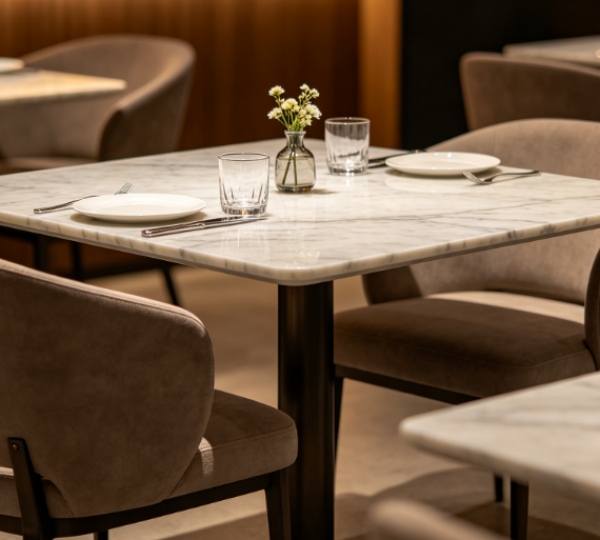
People judge hospitality furniture long after someone takes the first opening photo. Restaurant tables, hotel lounge pieces, and retail display counters face harsh conditions. They must survive heat, spills, rubbing, and daily cleaning cycles. They also endure constant movement. At the same time, they need to match the original design concept. A sintered stone table can fix this mix of visual and daily operating stress. However, buyers must first clearly define the surface, edge, support, and packing needs before factory production starts.
Project Pressure Behind Stone-Look Furniture
Commercial furniture breaks down in different ways compared to home furniture. Staff might wipe a cafe table dozens of times each day. Workers often move a lobby table for special events. Meanwhile, a retail display surface holds heavy decorative items under bright lights. These tough conditions make stain resistance and edge protection extremely important. A consistent appearance across many items matters much more than looking at just one showroom sample.
Material selection also affects brand perception. Natural marble can look premium but may need sealing and careful stain management, while laminate can be economical but may age quickly in upscale interiors. Sintered stone gives project teams a stone-like surface with a dense mineral body and a lower-maintenance finish for high-use spaces.
What Makes Sintered Stone Useful for Tables
Daily Cleaning and Stain Control
A table surface must stay presentable under food, drinks, oils, and routine cleaning. Guanyu Ceramics supplies slabs and sintered stone options for decorative surfaces, including products positioned for furniture and modern interiors. For buyers comparing sintered stone furniture, the practical value is not only hardness; it is the ability to keep a refined surface easier to maintain across many units.
Low water absorption is especially useful in commercial settings. The Guanyu slab specifications include 1200 x 1200 mm large-format floor slabs with 0.3% water absorption and nano-coated stain resistance, while the sintered stone collection uses a 1200 x 2400 x 9 mm format. These figures help buyers discuss moisture exposure and cleaning expectations with fabricators.
Heat, Scratch, and Impact Expectations
Hospitality teams frequently ask if the surface can safely handle hot coffee cups, heavy plates, metal keys, purses, and rough cleaning tools. The Guanyu luxury sintered stone collection is built specifically for scratch, stain, and heat resistance. Its UV-printed sintered stone or slab option is noted as 6 mm ultra-thin. It is also impact-resistant, fireproof, and scratch-resistant. This makes it highly useful for decorative wall panels and custom interior surfaces.
The hidden support system still matters a lot. A thin slab can act as a very strong top surface. However, it becomes weak if workers back it poorly, drill it wrong, or ship it carelessly. Buyers must clearly state what they actually need. They should clarify if they want finished table parts, cabinet doors, or counter fronts. Alternatively, they might just want full raw slabs for a different furniture factory to cut and shape.

Specification Points Buyers Should Freeze Early
A clear furniture specification prevents small production decisions from becoming expensive site problems. The most important details are surface format, thickness, edge treatment, corner shape, base connection, finish, quantity, replacement policy, and packing method. Guanyu slab-integrated cabinetry information includes CNC-cut edges, 45-degree mitered joints, and seamless full-slab wrapping, which are useful concepts for furniture buyers reviewing fabrication quality.
| Decision point | Why it matters | What to confirm |
| Surface format | Controls visual continuity and yield | Full slab, cut-to-size part, or finished component |
| Thickness and backing | Affects rigidity, weight, and mounting | Approved thickness, support board, and base interface |
| Edge profile | Edges take the highest impact | Mitered, rounded, beveled, or protected corners |
| Finish | Changes glare, cleaning, and design mood | Matte, polished, marble-look, or custom print |
| Packing | Breakage often starts before installation | Corner guards, carton structure, and replacement plan |
Where Sintered Stone Tables Fit Best
Hospitality projects use sintered stone most effectively where surfaces carry both traffic and visual weight. A sintered stone table can work in restaurant dining zones, hotel lounges, reception areas, boutique retail spaces, showroom displays, and apartment amenity rooms. The material suits interiors that need a premium stone effect without the maintenance profile of many natural stones.
Some applications demand extra caution. Outdoor terraces, heavy rolling loads, or large unsupported spans need product-specific confirmation from the fabricator. Buyers should verify the support frame, hole drilling, edge reinforcement, and safe handling method rather than treating the slab name as a complete furniture system.
Best-Fit Commercial Uses
- Restaurant and cafe tabletops that face repeated cleaning and spills.
- Hotel lobby tables, side tables, and lounge furniture needing visual consistency.
- Retail display counters where surface appearance supports brand value.
- Cabinet doors or decorative fronts that require precise edges and slab wrapping.
Situations Requiring Extra Review
Large cantilevered tops require engineering attention. Sintered stone performs best when the support structure, adhesive, holes, and edge profile are designed together. For heavy public use, buyers should ask for drawings, approved mockups, and a packing method that protects corners during export and site handling.

How Guanyu Ceramics Supports Furniture Buyers
A surface buyer needs more than a beautiful slab pattern when the order becomes a repeat project. Guanyu Ceramics has operated in building materials since 2001 and exports tiles, mosaics, slabs, flexible stone, furniture, outdoor lighting, and related materials to dozens of countries and regions. That wider supply base helps project buyers coordinate surfaces across floors, walls, and furniture features.
Customization is another important part of furniture planning. Guanyu supports OEM/ODM work, including custom sizes, patterns, and color matching, while Guanyu also supports Pantone-matched digital printing and precision fabrication concepts. Buyers evaluating fully sintered tile and slab options should use drawings and approved samples to keep the final table program repeatable.
Summary for Hospitality Surface Planning
Sintered stone tables are strongest when they are specified as finished project components, not vague stone-look products. The buyer should lock surface size, finish, thickness, edge, backing, base connection, packing, and replacement needs before mass production. That discipline turns a premium material into a dependable hospitality furniture surface.
For hotel, restaurant, showroom, or retail furniture programs, Guanyu Ceramics can help match sintered stone surfaces with broader decorative material needs. Share drawings, target quantity, finish direction, and export destination through the Guanyu Ceramics contact page when project-specific quotation support is required.
FAQ
Is sintered stone good for restaurant tables?
Sintered stone can be suitable for restaurant tables because it offers a hard, stain-resistant, heat-resistant surface for frequent use. The final performance depends on thickness, backing, edge design, base support, and handling quality.
What thickness is best for a sintered stone tabletop?
There is no universal thickness for every tabletop. Buyers should confirm the slab thickness, support board, table size, edge profile, and base structure with the supplier or fabricator before approving production.
Can sintered stone furniture be customized?
Sintered stone furniture can often be customized by size, pattern, color, and fabricated detail. Guanyu Ceramics supports OEM/ODM customization, so drawings and approved samples should guide the final quotation.
What is the main risk in bulk tabletop orders?
The main risk is usually fabrication and logistics rather than the surface label alone. Corners, drilled holes, thin edges, carton protection, and replacement planning should be reviewed before export shipment.
Is sintered stone better than marble for hospitality furniture?
Sintered stone is often easier to maintain than many natural stones in busy hospitality areas. Marble may offer unique natural variation, while sintered stone can offer stronger repeatability and lower routine maintenance.

our best Product
Product We’re Offering

get in touch
How May We Help You!

our testimonials
What They Say About Our