
News
Why Drainage Matters for Non-Slip Wet Room Floors
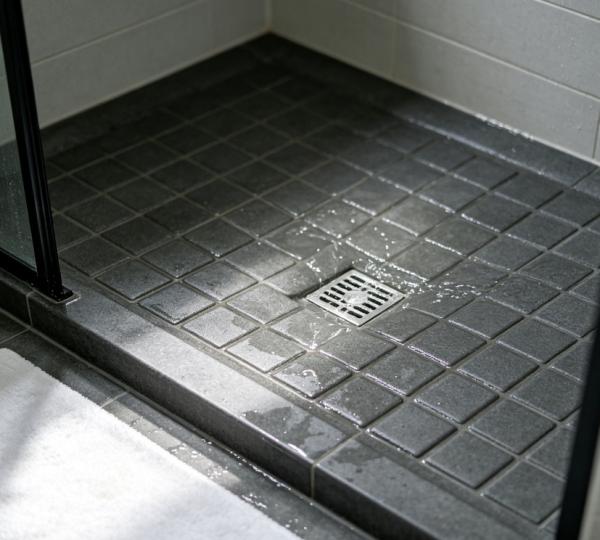
A wet-room floor can have a textured face and still feel unsafe if water stays where people walk. Drainage, slope, joints, cleaning, and surface texture work as one system, so buyers should evaluate the floor from the drain outward instead of selecting a tile by appearance alone.
Why Texture Alone Does Not Prevent Slips
Standing water changes the walking condition
A tile that performs well in a controlled test is not automatically a safe finished floor when soap film and standing water remain on the surface. Low spots, poorly aligned drains, blocked outlets, and inconsistent falls can keep the walking area wet for longer than the design intended. The first selection question is therefore how water will leave the room.
A small-format mosaic may help a sloped floor follow the drain, while a larger unit may simplify cleaning on a flatter zone. Neither format proves slip resistance without product-specific evidence and a suitable installation system.
Slip resistance is a system decision
Slip risk is shaped by the tile face, grout, water, soap, bare feet, footwear, slope, and maintenance. A rough texture may offer more contact but can also hold residue. A smoother face may be easier to clean but needs closer review in the wet condition. The best choice balances traction, drainage, comfort, and the cleaning routine the operator can actually maintain.

Drainage, Format, and Joint Layout
Small formats can follow a fall more easily
Small units can make it easier to form a controlled fall toward a drain because more joints can absorb changes in direction. That does not make every mosaic a safe choice, but it gives the installer more layout flexibility around a central, linear, or offset drain. The project drawing should show the drain, the tile direction, the joint pattern, and the likely cut pieces.
Large units can create a calmer visual field and fewer grout lines, but the floor must still direct water without abrupt level changes or low spots. The decision depends on the drain arrangement, room size, substrate preparation, access, and the selected tile’s installation requirements. Format should follow the wet-room geometry rather than a trend image.
Grout lines need maintenance planning
Grout is part of the walking surface and the water-management detail. Joint width, grout type, curing, cleaning, and repair all affect how the floor looks and performs over time. A buyer who wants minimal maintenance should compare the total cleaning route, not simply count the number of joints in the initial design.
| Decision area | What to confirm | Why it matters |
| Drainage | Drain type, fall, low points, and waterproofing responsibility | Reduces standing water in the walking zone |
| Tile format | Sheet or unit size, cut plan, and drain coordination | Matches the material to the floor geometry |
| Surface | Texture, finish, barefoot comfort, and wet sample response | Balances traction with usability and cleaning |
| Joints | Width, grout system, curing, cleaning, and repair route | Keeps the installed floor maintainable |
| Evidence | Product code, finish, test method, and sample match | Prevents a generic claim being applied to the wrong model |
How to Read Non-Slip Evidence Without Overpromising
Ask what was actually tested
A credible product review names the exact model, finish, size, test method, wet condition, and intended use. If a supplier provides a slip-resistance value, ask whether it belongs to the offered surface or to a different finish from the same product family. A number without product identity is weak evidence for a purchase decision.
For North American projects, ANSI A326.3 is a recognized test method for hard-surface flooring materials, but a test method is not a universal guarantee for every finished wet room. The buyer still needs to connect the result to the selected model, the room condition, drainage design, maintenance plan, and local project requirements.
Review the sample when it is wet
A dry sample can hide the exact problem a wet room creates. Review the surface with water, check the lighting, feel the surface with the intended user profile in mind, and observe whether soap residue or grout contrast changes the design. The sample cannot replace a laboratory test, but it can expose poor visual or maintenance fit before the order is released.

A Buyer Checklist for Wet-Room Approval
The approval record should connect the product sample to the room drawing. That record gives the distributor, contractor, and designer one version of the truth when the tile, grout, drain, and cleaning instructions are discussed.
- Name the room type, barefoot or footwear use, user profile, wetness, and cleaning frequency.
- Mark the drain, fall, waterproofing scope, thresholds, joints, and areas where water may collect.
- Match product code, finish, size, color, sheet backing, and batch description to the approved sample.
- Request the declared slip-resistance result, test method, wet condition, and stated limitations.
- Record the grout system, cleaning method, spare-unit plan, and responsibility for repairing damaged joints.
This checklist is also useful for a commercial buyer comparing wet room tiles non slip from several suppliers. It shifts the conversation from a broad anti-slip label to evidence that can be checked against the room, the sample, and the installer’s method.
Where Guanyu Ceramics Can Support the Specification
Guanyu Ceramics supplies porcelain tiles and mosaics for decorative and building-material applications, so its role in a wet-room discussion should be model-specific. Ask for the exact face, finish, size, backing, sample, and evidence available for the proposed area rather than treating the company’s general product range as a product test.
For a project that needs a modern surface with controlled joints, the team can compare a mosaic layout with a larger tile zone and review how each option meets the drain, edge, cleaning, and visual requirements. The most useful request includes a plan, wet-zone details, preferred look, and the questions that remain open.
A supplier conversation about slip resistant shower floor tile should also keep local accessibility, waterproofing, drainage, and public-use requirements in view. Those requirements may be more demanding than a product label, and they belong in the final design and installation review.
Summary: Start at the Drain, Then Choose the Surface
The practical takeaway is that non-slip wet-room performance begins with water management. Match the drain and floor geometry to a suitable format, then review texture, grout, wet comfort, cleaning, product-level evidence, and local requirements as one decision. The next action is to approve a room-specific sample and evidence pack before selecting the final surface.
Send Guanyu Ceramics the wet-room plan, preferred finish, drain details, and test questions so the proposed tile or mosaic can be reviewed against the actual floor condition. You can contact Guanyu Ceramics with the project details for a focused review.
FAQ
Does a textured tile automatically make a wet room safe?
No. Texture is only one part of the system. Drainage, slope, soap residue, grout, cleaning, product-specific test evidence, and installation quality all affect the completed floor.
Are small mosaic tiles better for a sloped wet-room floor?
They can be easier to coordinate around a drain because more joints can follow changes in direction, but format alone does not prove slip resistance. Review the exact surface, grout, wet condition, and installation plan together.
What should a non-slip tile supplier provide?
Request the exact product code, finish, size, wet test method, reported result, sample, backing or sheet details, cleaning guidance, and stated limitations. The information should match the model and finish proposed for the room.

our best Product
Product We’re Offering


get in touch
How May We Help You!

our testimonials
What They Say About Our